




The call often comes in autumn, when the heating system is switched back on after the summer break: “The heating system is gurgling.” Or: “There’s a rushing noise in the pipe in the bedroom.” Or: “The radiator upstairs isn’t getting properly warm and is making strange noises.”
For HVAC professionals, calls like these are part of everyday business. The suspected cause is often obvious: air in the system. So the system is vented, the pressure is checked and perhaps a little water is added. In many cases, this resolves the problem in the short term.
However, if the noises return after a short time or persist despite venting, it is worth taking a closer look at a cause that cannot be heard but can be measured: water quality.
What heating system noises can tell you about water quality
Not every heating system noise is related to water quality. However, certain characteristic noises can indicate sludge, deposits or corrosion within the system.
Gurgling and bubbling
Gurgling is commonly associated with air in the system, and this is often the immediate cause. But why is there air in the system in the first place?
In many cases, the reason is recurring water loss followed by repeated top-ups. Incorrect installation practices, particularly when topping up the system, can introduce dissolved gases into the circuit while also altering the water chemistry. The consequences can include corrosion, gas formation and a self-reinforcing cycle of problems.
Rushing and flow noises
Unusual flow noises can indicate restricted flow passages. This is exactly what can happen when magnetite, limescale or sludge accumulates in pipes and fittings.
Thermostatic valves and control valves are particularly susceptible. Even small deposits can alter the flow rate and generate audible noise.
Knocking and creaking
Knocking noises, particularly during heat-up, can indicate limescale deposits on the heat exchanger. Limescale changes the thermal behaviour of the affected surfaces and can create audible stresses as temperatures change. Magnetite deposits in areas exposed to significant temperature fluctuations can also cause similar noises.
Radiators do not heat up evenly
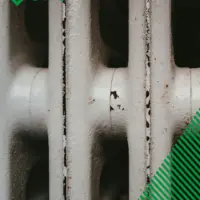
Strictly speaking, this is not a noise, but it is part of the same pattern of complaints. If individual radiators only heat up partially or take considerably longer to warm up than others, sludge accumulation in the lower section of the radiator is often the cause. Magnetite and corrosion products settle there and restrict water circulation.
Making the cause visible
In most cases, two steps are enough to narrow down the cause.
Take a water sample
A visual assessment of a water sample can provide initial clues. Black or heavily turbid water is a clear indication of magnetite and corrosion products in the system. Brownish water may indicate iron oxides, while a yellowish appearance can point to dissolved salts or copper corrosion.
Check the measurement values
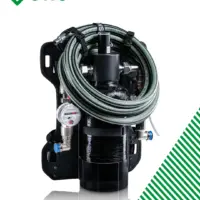
The WaterBoy measuring case allows HVAC professionals to measure the relevant parameters directly on site: pH value, electrical conductivity and total hardness.
A pH value below 8.2, elevated electrical conductivity or high total hardness can indicate that the water chemistry is not within the required range. These results help identify potential water quality issues that may contribute to the system’s problems.
From diagnosis to solution
If the water sample and measurement results indicate that water quality is contributing to the problem, a clear action plan can be established.
Step 1: Filter the system water and restore water quality
When rehabilitating a heating system, the aim is to remove existing contaminants and restore the water quality to a range that complies with the applicable guidelines. Modern UWS treatment equipment can perform several tasks simultaneously: demineralising the system water, stabilising the pH value and filtering magnetite, particles and other contaminants from the circuit.
The bypass treatment method is a particularly efficient approach. The heating system remains in operation while a treatment unit, such as the Heaty Ferriline No. 2 or the Heaty Profiline No. 2, treats the system water as it circulates through the bypass. The Vadion pH-Control mixed-bed resin supports demineralisation and pH stabilisation.
Where the main objective is to remove magnetite, sludge and other suspended solids, the specialised MAGella magnetic dirt separators provide a long-term solution.
Depending on the installation requirements, the MAGella twister5 or twister10 can be installed in the main flow, while the MAGella Side Stream Filter is suitable for larger systems using side-stream filtration.
These permanently installed separators retain magnetic particles and other contaminants, helping protect the system against renewed sludge accumulation over the long term. Routine maintenance and emptying can be easily incorporated into regular service intervals.
For one-off filtration without permanently installing magnetic dirt separators, UWS offers the Heaty Filtra as a mobile solution.
Step 2: Secure the make-up water supply
To maintain stable water quality over the long term, the system should always be topped up with treated water. Automatic top-up units such as the Heaty Complete Advanced or Heaty Complete PROfessional ensure that treated water is supplied, helping prevent uncontrolled top-ups with untreated drinking water from reintroducing the original problem.
Turning heating system noises into a sales opportunity
For HVAC professionals, heating system noises present a genuine opportunity. The customer has a specific problem that needs solving, and you have the solution – not just for the symptoms, but for the underlying cause.
Instead of simply venting the system and hoping the noises stay away for a while, you can show the customer what is happening inside the installation. A water sample and a quick measurement with the WaterBoy make the problem visible and understandable.
From there, you can demonstrate a clear path from diagnosis to filtration and water treatment, followed by long-term protection through professional make-up water management.
This is not upselling – it is professional problem-solving. And that is what builds trust and generates repeat business.
Conclusion
Heating system noises are more than a comfort issue. They are often an audible symptom of water quality that has moved outside the required range. Magnetite, sludge and limescale can restrict flow passages, impede circulation and generate noises that cannot be permanently eliminated by venting alone.
With targeted magnetite filtration, guideline-compliant heating water treatment and a properly controlled make-up water supply, the underlying causes can be addressed and the heating system can return to quiet, efficient operation in line with the applicable guidelines.