





Everything about VDI 2035
VDI 2035 sets out clear guidelines for preventing corrosion and limescale build-up in hot-water heating systems. Heating water that has not been properly treated can lead to damage, reduced efficiency and, in the long term, rising operating costs.

Why is the VDI Guideline 2035 important?
VDI guideline 2035 provides homeowners and specialist companies with clear guidelines for avoiding corrosion and limescale deposits in hot water heating systems. Inadequately treated heating water can cause considerable damage that impairs the efficiency of the system in the long term and increases operating costs. Hardness formers such as calcium and magnesium promote limescale formation, while dissolved oxygen can lead to corrosion. These factors have a negative effect on heating performance and increase energy consumption. VDI 2035 therefore defines specific limit values for water hardness, pH value and conductivity, which are to be achieved by softening and desalinating the water.
Of course, all the measures and values mentioned here apply almost identically to the ÖNORM H 5195-1 and SWKI BT 102-01 standards.
Is the application of VDI 2035 mandatory?

Areas of application for heating water treatment according to VDI 2035
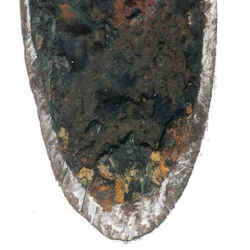
Stone formation
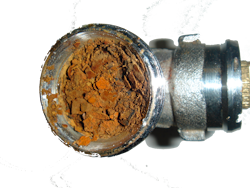
Water-side corrosion
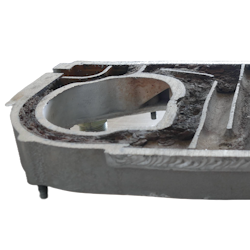
Corrosion on the flue gas side
Heating water according to VDI 2035: Important requirements for longevity and efficiency
The VDI 2035 guideline sets out clear requirements for the quality of heating water to ensure the efficiency and longevity of heating systems. The table specifies which values for the sum of alkaline earths (total hardness), the specific system volume, the electrical conductivity and the pH value must be complied with depending on the total heat output and the materials used in the system.
Table 1. Reference values for filling and make-up water as well as heating water
| Filling and make-up water as well as heating water, depending on heating output | |||
| Total heating output in kW | Total alkaline earths in mol/m³ (total hardness in °dH) | ||
|---|---|---|---|
| Specific system volume in l/kWheating output1 | |||
| Total heating output in kW | ≤ 20 | > 20 to ≥ 40 | > 40 |
| ≤ 50 kW specific water content of heat generator ≥ 0.3 l per kW1 |
none | ≤ 3.0 (16.8) | |
| ≤ 50 kW specific water content of heat generator < 0.3 l per kW2 (e.g. instantaneous water heater) and systems with electric heating elements |
≤ 3.0 (16.8) | ≤ 1.5 (8.4) | < 0.05 (0.3) |
| > 50 kW to ≤ 200 kW | ≤ 2.0 (11.2) | ≤ 1.0 (5.6) | |
| > 200 kW to ≤ 600 kW | ≤ 1.5 (8.4) | < 0.05 (0.3) | |
| > 600 kW | < 0.05 (0.3) | ||
| Heating water, independent of heating output | |||
| Operating mode | Electrical conductivity in µS/cm | ||
| low-salt3 | > 10 to ≤ 100 | ||
| saline | > 100 to ≤ 1500 | ||
| Appearance | |||
| clear, free from sedimenting substances | |||
| Materials in the system | pH value | ||
| without aluminium alloys | 8.2 to 10.0 | ||
| with aluminium alloys | 8.2 to 9.0 | ||
2 For systems with multiple heat generators with different specific water contents, the lowest specific water content is decisive in each case.
3 Full softening is not recommended for systems with aluminium alloys; see also section 6.4.4 of VDI 2035.
Preventing damage through the correct application of VDI 2035
Maintaining the ideal pH value
The pH value of the water should be in the optimum range to prevent corrosion:
Reduction of conductivity
Low conductivity prevents corrosion by restricting charge transport:
Checking the water hardness
The water hardness influences the formation of stones in the heating system. High temperatures increase the effect. VDI 2035 recommends
Minimisation of oxygen input
Excessive oxygen input promotes corrosion. VDI 2035 therefore recommends
Products for heating water treatment according to VDI 2035
With our solutions, HVAC professionals can reliably measure, treat, replenish and document heating water in accordance with VDI 2035. UWS provides everything needed to do so. We provide the necessary expertise in our practical, hands-on training courses.
VDI 2035 training course
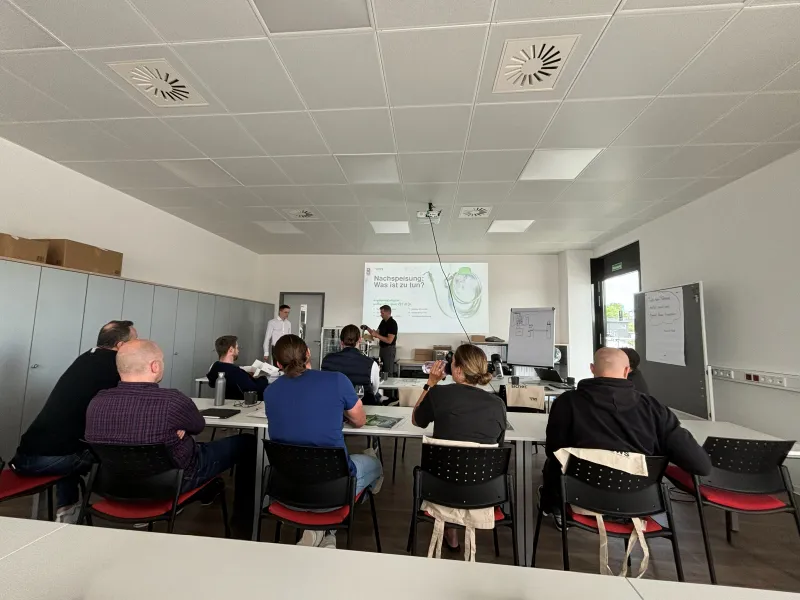
Our team will visit you to provide training on the key aspects of VDI 2035.
We will also address questions relating to cooling and heating water treatment. We will explain the technical possibilities and the opportunities offered by water treatment.
We will, of course, be bringing samples of our Heaty Complete Home / Advanced / PROfessional make-up water systems, MAGella magnetite filters and treatment units such as Ferriline or Profiline.
Incidentally, our team are also experts in Ö-NORM H 5195-5 (Austria) and SWKI BT 102-1 (Switzerland).
Filtration: Removal of particles
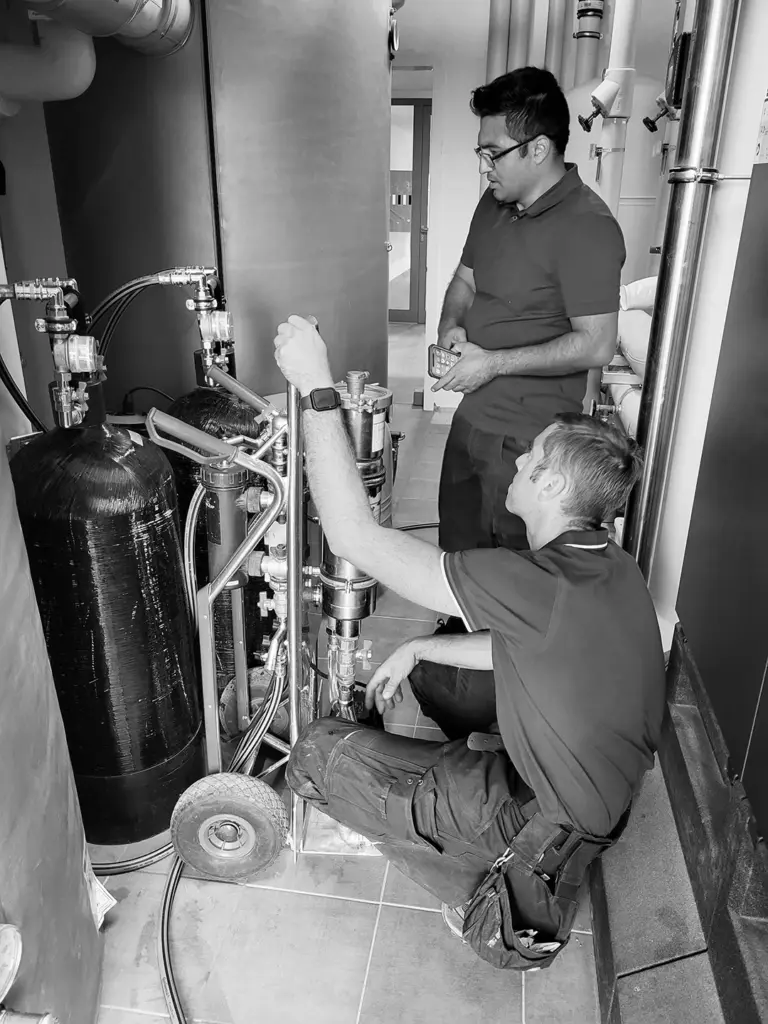
The first step is filtration, in which coarse impurities such as rust and dirt particles are filtered out of the heating water. This is done with the help of fine filters, which remove harmful particles from the water.
Advantages:
➜ Reduced risk of deposits
➜ Protection against corrosion by removing foreign particles
For filtration, UWS offers, for example, the MAGella dual filters twister5 & twister10, which effectively remove both magnetic and non-magnetic particles.
Desalination: Reduction of conductivity
Desalination of the water is another recommended measure. Desalination devices reduce the salt content in the heating water, which lowers conductivity and minimizes the risk of corrosion. This method is particularly suitable for systems without aluminum components.
Advantages:
➜ Reduced likelihood of corrosion
➜ Compliance with the manufacturer’s requirements for the heating water
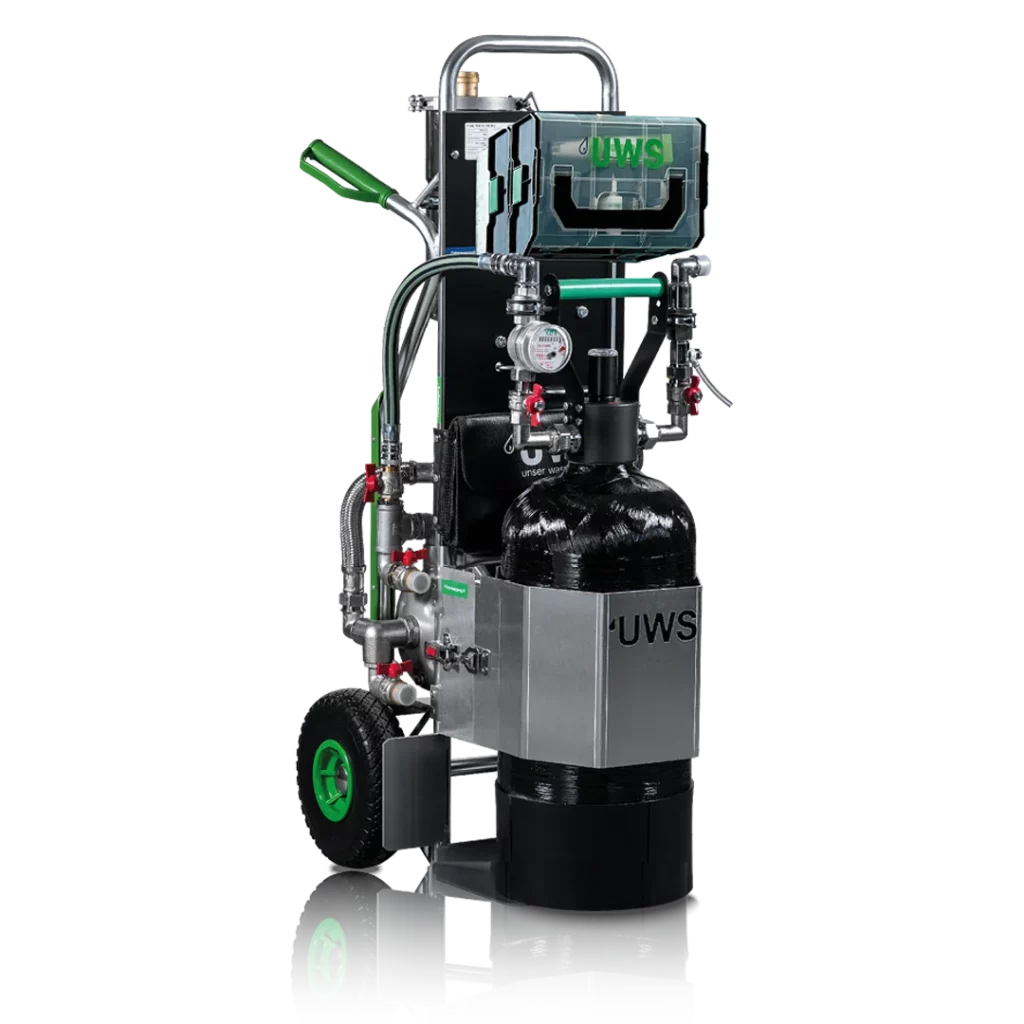
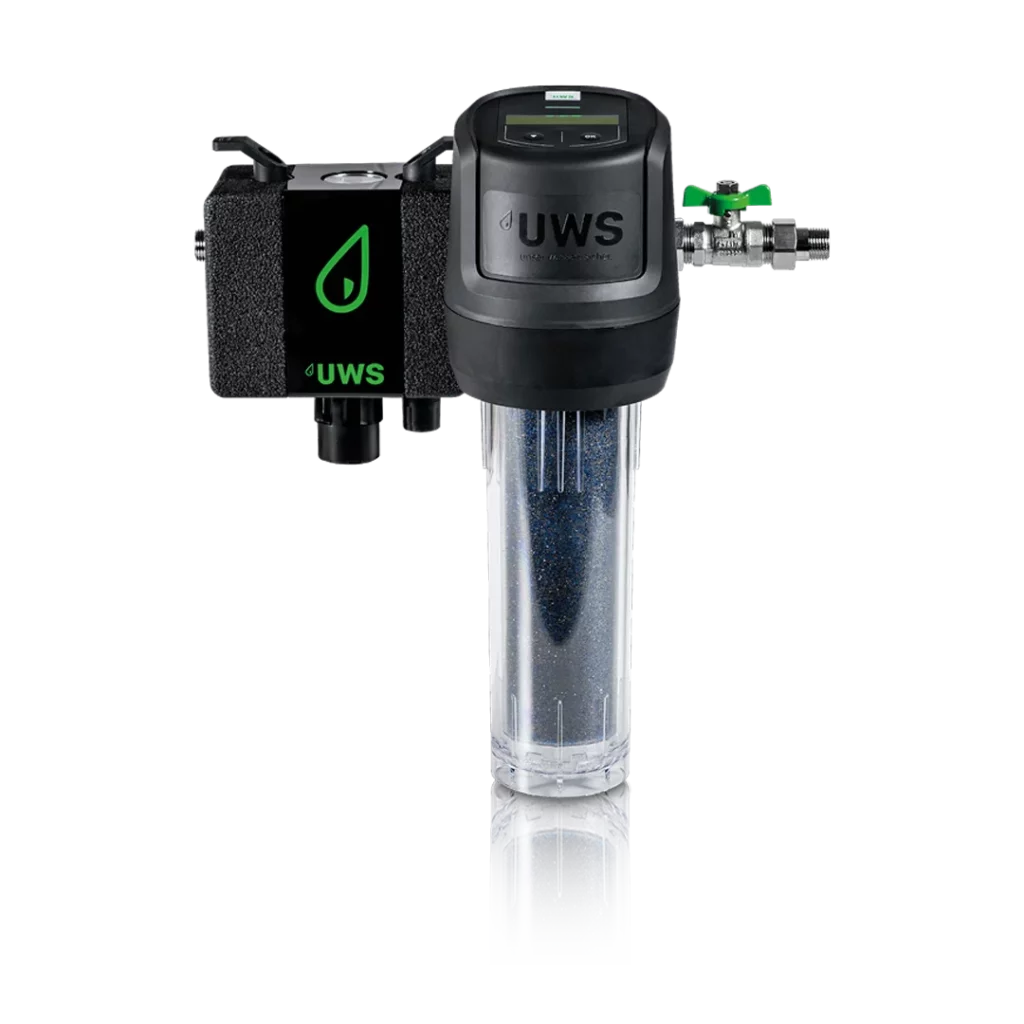
UWS offers, for example, the Heaty Profiline No. 2 a complete device for professional bypass treatment that enables efficient desalination.
Softening: reduction of water hardness
Softening the water removes calcium and magnesium ions, among other things, which are responsible for scale formation in the heating system. This measure prevents limescale deposits and improves heat transfer.
Softening protects against:
➜ Stone formation and limescale deposits
➜ Loss of performance in the heating system
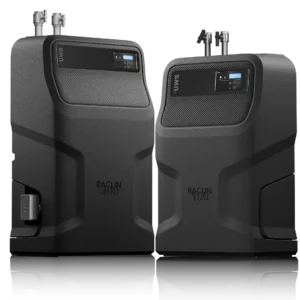
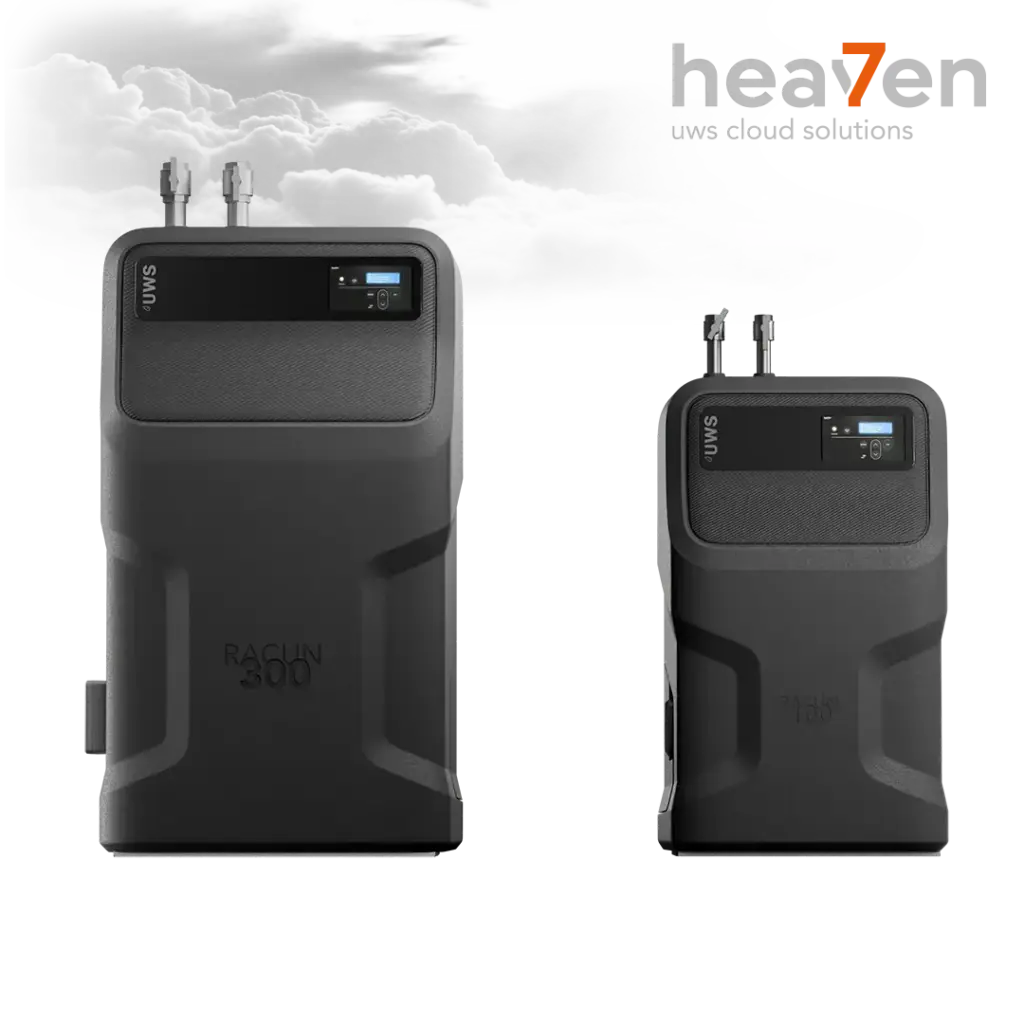
Especially in the event of recurring problems with the heating water, it is possible to install an all-round carefree package as a stationary system. The devices in the Racun series automatically soften, fill, treat and monitor the water quality.
pH value regulation: Optimum pH balance
VDI 2035 specifies an ideal pH value between 8.2 and 10.0 to prevent corrosion. If the pH value is too low, this can corrode the metal components of the system. Special mixed bed resins can be used to keep the pH value stable.
Advantages:
➜ Protection of the heating system against acid-induced corrosion
➜ Longer service life of the system components
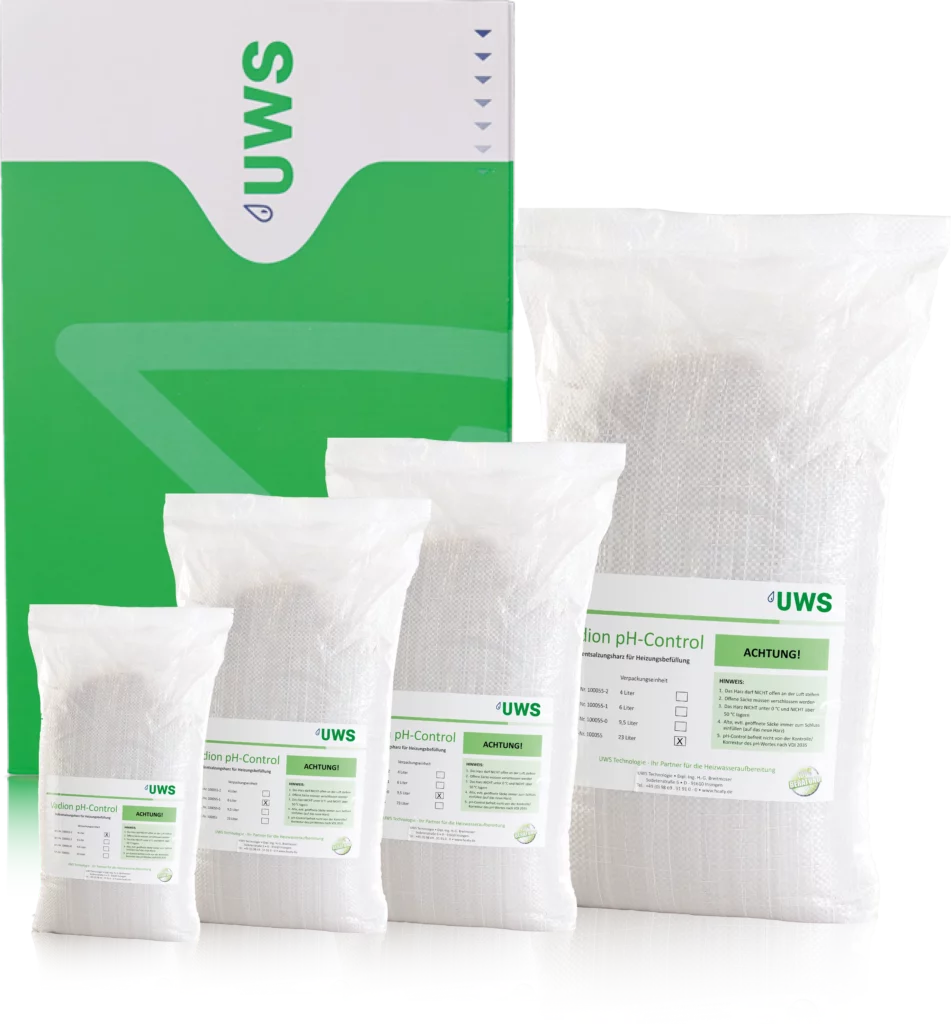
The Vadion pH-Control from UWS is a mixed-bed resin which, in addition to desalination, also automatically adjusts and stabilizes the pH value of the filling water within the required range and removes any residual hardness. We use our Vadion pH-Control in all our devices.
Use of additional devices
A make-up unit can be installed for automated treatment. These devices ensure that make-up water is treated automatically or manually as required and always complies with VDI specifications.
Advantages of make-up units:
➜ Compliance with VDI 2035 and EN 1717 specifications
➜ utomatic adjustment of the water quality in the heating system
The Heaty Complete PROfessional from UWS is a fully automatic IoT make-up unit including BA system separator for small heating and cooling systems that enables controlled make-up.
Heaven7 - UWS Cloud Portal
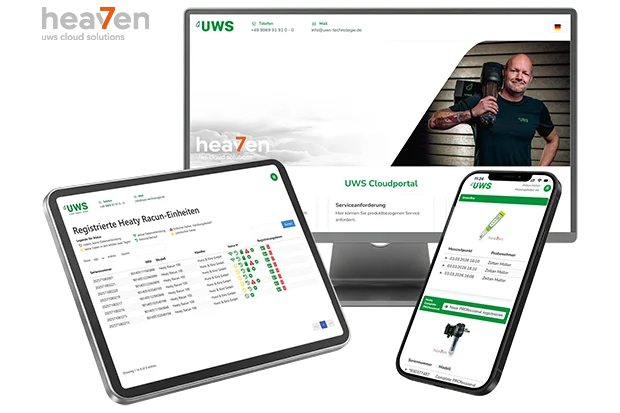
A new approach to digital system monitoring.
The UWS Cloud Portal brings together system information, measurement logs and system messages on a single central platform for the first time.
All data from the WaterBoy App is automatically documented in accordance with standards and can be accessed at any time. At the same time, intelligent Heaven7 devices such as the Racun series or replenishment solutions such as the Heaty Complete PROfessional deliver important information directly to the cloud – for example, in the event of leaks or when Vadion pH-Control mixed-bed resin has been used up.
This creates digital documentation of system statuses and operating data – clear, structured and available at any time.
measure – treat – replenish – document
One platform. All information. Maximum transparency.
FAQ - VDI 2035
Although VDI 2035 is not a legal requirement, it is regarded as the standard by specialist companies and is a prerequisite for many heating manufacturers to honour warranty claims. Homeowners also benefit from compliance with the guideline, as it extends the system’s service life and increases efficiency Technical information on heating water treatment in accordance with VDI 2035. For systems with aluminium components, the guideline recommends a pH value between 8.2 and 9.0 to minimise the risk of corrosion.
Heating water should be clear and free of sedimenting substances, with a pH value of 8.2 to 10.0 (8.2 to 9.0 for aluminum parts) and a conductivity of less than 100 µS/cm with low-salt operation.
Desalination is required if the water hardness or conductivity is above the limit values specified in VDI 2035, especially if a conductivity of less than 100 µS/cm is required.
The maximum conductivity should not exceed 100 microsiemens per centimetre (µS/cm) in order to minimize corrosion and optimize heating performance.