




When the pressure in a heating system drops repeatedly, many operators initially respond by topping up the system. However, this often fails to resolve the underlying problem. Recurring pressure loss can be caused by faulty pressure maintenance, a defective diaphragm expansion vessel (DEV), leaks or other technical issues. By systematically identifying the cause, heating professionals can protect the system against consequential damage and help ensure reliable operation.
Why does a heating system lose pressure?
System pressure is essential for the reliable operation of a closed-loop heating system. It ensures that the heating water remains at sufficient pressure throughout the system and that all components are reliably supplied with water.
A drop in pressure can have various causes. A one-off pressure drop following maintenance work or venting must be assessed differently from recurring pressure loss during normal operation. It is therefore important to consider not only how far the pressure drops, but also when the change occurs and how frequently it happens.
Comparing the pressure in a cold system with that in a warm system can provide particularly useful information. If the pressure changes significantly during heating or drops considerably as the system cools down, this may indicate problems with pressure maintenance. If the pressure continues to fall regardless of the operating temperature, the heating contractor should also investigate possible water losses.
Repeatedly topping up a heating system to maintain the correct pressure without investigating the cause merely addresses the symptom. The underlying fault remains and may lead to further damage over time.
The most common causes of pressure loss in heating systems
1. The diaphragm expansion vessel is not working properly
The diaphragm expansion vessel is one of the most important components of the pressure maintenance system. It accommodates the additional volume of heating water as its temperature rises and returns this water to the system as it cools down.
If the expansion vessel is incorrectly sized, its pre-charge pressure is incorrect or its diaphragm is damaged, it may no longer perform this function reliably. As a result, the pressure may fluctuate unusually sharply between a cold and a warm system.
Typical signs include a significant pressure increase during heating and a substantial pressure drop as the system cools down. If the pressure peaks become sufficiently high, the safety valve may open and discharge heating water. Once the system cools down, this water is missing from the circuit and the pressure drops.
The heating contractor should therefore check the expansion vessel’s sizing, pre-charge pressure and functionality. The system height, temperature conditions, required minimum pressure and manufacturer’s specifications must all be taken into account. The pre-charge pressure must be checked in accordance with the manufacturer’s specified procedure, rather than under arbitrary system conditions.
2. Heating water is escaping through leaks
Even small leaks can cause a heating system to lose water over an extended period. Not every leak is immediately visible.
Potential weak points include threaded connections, valves, pumps, air vents, seals and pipe joints. Locating leaks in underfloor heating systems or concealed pipework can be more difficult because escaping water may not be immediately noticeable.
The heating contractor should therefore systematically inspect potential leak points. Moisture, deposits or signs of corrosion around connections and components can provide useful clues. If concealed leaks are suspected, appropriate testing methods are required.
It is important not to assume too quickly that a pipe is leaking. Faulty pressure maintenance can cause similar symptoms and should also be investigated.
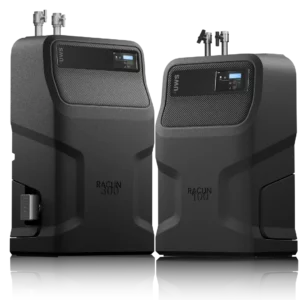
The integrated leak protection system in the Heaty Complete PROfessional detects unusual water top-up volumes, issues proactive alerts via the UWS Cloud Portal and shuts off the water top-up supply to help prevent water damage.
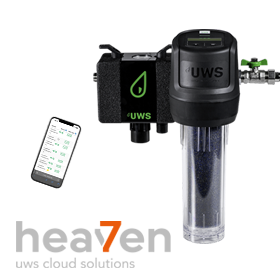
Heaty Complete PROfessional
Heaty Complete PROfessional is the world’s first smart IoT make-up system, including Cloud connection – fully automatic, leakage protection and digital water meter.Go to the product
3. The safety valve is discharging water
The safety valve protects the heating system against excessive pressure. It opens when the set opening pressure is reached and discharges heating water.
Repeated water discharge from the safety valve may indicate actual overpressure or a problem with pressure maintenance. A defective or leaking valve is another possible cause.
It is particularly important to distinguish between cause and effect. For example, a faulty expansion vessel may cause the pressure to rise sharply as the system heats up, triggering the safety valve and resulting in water loss. If the system is then simply topped up, the same sequence may occur again during the next heating cycle.
The heating contractor should therefore check not only the valve itself but also why it is opening. The safety valve must never be isolated or otherwise prevented from performing its protective function.
4. Automatic air vents or other Components are leaking
Automatic air vents remove air from the heating system. If they no longer close reliably, water may escape along with the air. The same applies to other components with damaged seals or connections.
A careful visual inspection is useful in these cases, too. Damp areas, limescale deposits or corrosion residues can indicate small water losses.
The heating contractor should also consider whether the system has recently been vented or work has been carried out on individual components. A certain pressure drop may occur following such work. However, if the pressure loss persists or recurs, the underlying cause must be investigated further.
5. The pressure maintenance system is incorrectly designed or set up
Not every system pressure problem can be traced to a single defective component. Incorrect design or settings within the pressure maintenance system can also lead to operational problems.
This may involve the interaction between the system height, minimum operating pressure, expansion vessel and operating conditions of the circulation pump. If the pressure is too low in certain parts of the system, unfavourable pressure conditions may develop. Among other things, this can promote air ingress and compromise the reliable supply of water to individual system components.
A professional diagnosis must therefore consider the entire system. Appropriate corrective measures can only be determined once the relevant pressure conditions and the functionality of the associated components have been established.
Systematically investigating pressure loss
To identify the cause reliably, the heating contractor should first record the symptoms and then carry out targeted checks. A systematic approach prevents individual components from being replaced prematurely while the underlying fault remains unresolved.
Step 1: Record the pressure profile
The system pressure should initially be recorded when the system is cold and again while it is heating up. The pressure after the system has cooled down is also informative. All readings should be assessed in the context of the prevailing operating conditions.
The frequency of pressure loss, previous water top-up volumes and any maintenance work carried out beforehand are also important. This information helps distinguish a one-off event from a recurring problem.
The Heaty Complete PROfessional records every water top-up and automatically stores the associated data in the UWS Cloud Portal, including the system pressure at the time of each top-up.
Heaty Complete PROfessional
Heaty Complete PROfessional is the world’s first smart IoT make-up system, including Cloud connection – fully automatic, leakage protection and digital water meter.Go to the product
Step 2: Check the pressure maintenance system and expansion vessel
The next step is to inspect the pressure maintenance system. This includes checking the expansion vessel’s sizing and condition, its pre-charge pressure and the required pressure conditions throughout the system.
The safety valve should also be checked for signs of water loss. If the components are not correctly matched to one another, the pressure maintenance system must be restored to the required technical specifications.
Step 3: Locate potential leaks
The heating contractor should then investigate possible sources of water loss. Visible connections, fittings, pumps, air vents and other accessible components should be carefully inspected.
If the cause remains unclear, further testing may be necessary. In the case of concealed pipework, targeted leak detection is often more appropriate than dismantling system components indiscriminately.
Step 4: Assess the heating water and the condition of the system
Once the technical cause has been narrowed down, the heating contractor should also assess the condition of the heating water. Repeated water losses and top-ups can change the water quality.
With every litre of make-up water, additional dissolved substances and potentially oxygen enter the circuit, depending on the water quality and treatment method used. This can affect the conditions for corrosion and deposit formation.
The heating contractor should therefore check whether the water quality still meets the requirements of the system. Relevant parameters include pH value and electrical conductivity. If there are corresponding indications, contaminants and corrosion products should also be investigated.
The Heaty Complete product range supplies treated water for system top-ups in accordance with VDI 2035. This prevents additional hardness-forming substances and similar constituents from entering the system through this route.
Step 5: Eliminate the cause and document the results
The appropriate corrective action can only be determined once the cause has been established. This may involve repairing a leaking component, correcting the pressure maintenance settings or replacing a defective expansion vessel.
Following the repair, the heating contractor should check whether the pressure remains stable under the intended operating conditions. The required make-up water volume and water quality must also be taken into account.
Clear, traceable documentation facilitates future inspections and provides a reliable basis for ongoing system maintenance.
Why Frequent top-ups can become a problem
When system pressure repeatedly drops, topping up the system may seem like the simplest solution. The pressure rises again and the heating system continues to operate, at least for the time being. However, frequent top-ups should alert the heating contractor to a potential problem.
Make-up water introduces additional substances into the system. Depending on its composition, these may include hardness-forming substances and dissolved salts. Oxygen can also promote corrosion processes. The actual effects depend on the water quality, the volume of make-up water and the conditions within the system.
Repeated top-ups can therefore promote the formation of corrosion products and deposits over time. Magnetite and sludge may circulate through the heating circuit and impair components such as pumps, valves and heat exchangers.
There is another important consideration: anyone who regularly tops up a system without eliminating the cause of the water loss risks allowing the original problem to worsen.
The correct sequence is therefore: Identify the pressure loss, determine the cause, rectify the fault and then assess the water quality.
Our article “Correct System Top-Ups: How to Protect Heating Systems from Damage in the Long Term” explains why the quality of make-up water matters and what requirements apply when topping up a heating system.
Note: The Heaty Complete product range supplies treated water for system top-ups in accordance with VDI 2035. This prevents additional hardness-forming substances and similar constituents from entering the system through this route.
The integrated leak protection system in the Heaty Complete PROfessional also detects unusual water top-up volumes, issues proactive alerts via the UWS Cloud Portal and shuts off the water top-up supply to help prevent water damage.
Heaty Complete PROfessional
Heaty Complete PROfessional is the world’s first smart IoT make-up system, including Cloud connection – fully automatic, leakage protection and digital water meter.Go to the product
Pressure loss and corrosion: What is the connection?
Pressure loss and corrosion are not automatically linked. For example, a faulty pressure maintenance system can cause problems even when there are no visible signs of corrosion. Conversely, corrosion can occur in a heating system without causing any immediately noticeable change in pressure.
Problems can arise when a technical fault repeatedly causes water losses and, consequently, frequent top-ups.
This is precisely why HVAC professionals should assess pressure maintenance and water quality together. Eliminating the original cause is essential to prevent the problems from recurring.
What role does VDI 2035 play?
The VDI 2035 series of guidelines addresses the prevention of damage in hot-water heating systems. VDI 2035 Part 1 focuses in particular on scale formation and water-side corrosion. Water quality is a key factor in ensuring reliable system operation over the long term.
In practice, this means that the heating contractor should not only resolve the pressure loss but also assess whether the water quality meets the requirements of the specific system. This includes relevant measurement values, system operating conditions and the heat generator manufacturer’s specifications.
The guideline does not replace systematic troubleshooting. Any unusual pressure loss must be investigated from a technical perspective. Appropriate heating water treatment can improve water quality, but it cannot repair a leak or correct a faulty pressure maintenance system.
Only the combination of a technically sound system, suitable water quality and proper documentation provides a reliable basis for long-term operation.
Monitor pressure maintenance and water quality together
A reliable heating system requires more than the correct filling pressure. Pressure maintenance must function properly, uncontrolled water loss must be prevented, and the heating water must retain the properties required for the system.
UWS supports HVAC professionals with solutions for water analysis, treatment, top-up and documentation. These solutions help professionals assess water quality and evaluate the effects of necessary top-ups. However, the technical cause of any pressure loss must always be identified and rectified separately.
By inspecting the system systematically, documenting measurement values and identifying changes at an early stage, heating professionals can prevent consequential damage and improve the conditions for reliable system operation.
Conclusion: Don’t just compensate for pressure loss — eliminate the cause
If a heating system repeatedly loses pressure, the heating contractor should not simply keep topping it up. Possible causes include a defective or incorrectly set expansion vessel, a faulty pressure maintenance system, leaking components or water loss through the safety valve.
Systematic troubleshooting helps identify the actual cause and address it effectively. The heating contractor should then also check the water quality, as repeated top-ups can change the conditions that influence corrosion and deposit formation.
Only by considering pressure maintenance, water losses and water quality together can heating professionals identify problems early and protect heating systems against preventable consequential damage.
Frequently asked questions about pressure loss in heating systems
How often can a heating system lose pressure?
Recurring pressure loss should always be investigated. The pressure may initially change following certain maintenance procedures or venting. If water has to be added regularly, the heating contractor should determine the cause rather than accepting the pressure loss as a normal operating condition.
What is the most common cause of pressure loss in a heating system?
Important causes include problems with pressure maintenance, particularly an incorrectly set or defective diaphragm expansion vessel, as well as leaks and water loss through the safety valve. The actual cause must be determined by examining the pressure profile and the system’s operating conditions.
Can a defective expansion vessel cause a heating system to lose water?
Yes. If the expansion vessel cannot adequately accommodate changes in the volume of the heating water, the pressure may rise sharply as the system heats up. If this triggers the safety valve, water is discharged from the system. The pressure may then drop significantly as the system cools down.
Why is frequently topping up heating water a problem?
Every top-up with untreated water introduces additional dissolved substances and potentially oxygen into the system. Frequent top-ups can change the water quality and promote corrosion or deposit formation. The cause of the pressure loss should therefore always be established first.
Which water parameters should the heating contractor check when investigating pressure loss?
Depending on the condition of the system, pH value and electrical conductivity are particularly relevant. The heating contractor should also consider the overall water quality, possible corrosion products and the heat generator manufacturer’s specifications.
Can heating water treatment help prevent pressure loss?
Heating water treatment can help establish or maintain suitable water quality. However, it cannot eliminate leaks or repair a faulty pressure maintenance system. The technical cause of the pressure loss must therefore be identified and rectified first.