





pH is one of the most critical parameters in heating water—and at the same time one of the most commonly misunderstood. In practice, it is often measured only once, noted, and then largely ignored. Yet it significantly influences how stably a heating system can operate over the long term.
This is because the pH value determines whether the heating water has a protective or corrosive effect on the materials used in the system. It is therefore not an isolated measurement, but a central factor in the chemical balance of the entire heating circuit.
The pH value as a control parameter for material behavior
In a modern heating system, different materials come into contact with one another. Steel, copper, and aluminum are common, supplemented by various sealing and plastic components. Each of these materials reacts differently to water chemistry—and especially to the pH value.
A slightly alkaline range can, for example, protect steel from corrosion because stable protective layers form. However, the same pH range can already be critical for aluminum. This is precisely where the challenge lies: there is no universal ideal value that applies equally to all systems.
Instead, the pH value must always be considered in the context of the materials used. The relevant requirements are described, among other places, in VDI 2035, which provides clear recommendations for different system configurations. What is decisive here is not so much a fixed target value as a stable range suitable for the system.
What actually happens in the event of deviations
If the pH value deviates from the optimal range, changes in the system often occur gradually—but with noticeable consequences over time.
At pH values that are too low, i.e., in the acidic range, the solubility of metals increases significantly. This means that materials such as steel or iron dissolve more readily. This process is not always immediately visible, but in the long term leads to material loss, corrosion damage, and the formation of corrosion products such as magnetite. These deposits tend to accumulate in sensitive components such as pumps, heat exchangers, or valves, where they impair their function.
At first glance, a pH value that is too high seems less critical, but it is particularly problematic for aluminum. This can lead to surface corrosion that permanently damages the material structure. At the same time, seals and elastomers can also suffer under strongly alkaline conditions, which in turn can lead to leaks or malfunctions.
In both cases, it becomes clear that the pH value does not act in isolation but systemically. It influences processes that develop over months or years—often unnoticed until the first symptoms appear.
Why the pH value is not a static value
A common misconception in practice is the assumption that the pH value remains stable after the initial filling. In fact, however, it is subject to continuous change.
Every top-off introduces new water into the system—and with it, new dissolved substances and gases. Oxygen ingress, material reactions during operation, and even the slightest leaks can shift the chemical balance. Temperature changes and operating conditions also indirectly affect the water chemistry.
This means: The pH value is not a parameter set once and for all, but a dynamic indicator of the system’s current state. Anyone who considers it only at specific points in time overlooks precisely this development.
Interaction with Conductivity
The pH value becomes particularly relevant in conjunction with conductivity. Both parameters are closely linked and should never be evaluated in isolation.
Increased conductivity indicates a higher concentration of dissolved salts. These act as electrolytes and promote electrochemical corrosion processes. If the pH value is simultaneously outside the optimal range, these effects reinforce each other.
In practice, this means that even a “seemingly acceptable” pH value can become critical if the conductivity is too high—and vice versa. Only by considering both factors together can a realistic assessment of water quality be made.
Conclusion: Stability does not arise by chance
The pH value is not a minor parameter that you measure once and then check off the list. It is a central component of water chemistry and is therefore directly linked to the service life, efficiency, and operational reliability of a heating system.
The key is not to achieve a specific value, but to create and maintain a stable equilibrium in the system. This is precisely where the difference lies between short-term commissioning and long-term, well-planned system operation.
Those who understand the pH value and check it regularly can detect changes early on and respond appropriately. Those who ignore it risk creeping damage that only becomes apparent once the cost of repair has already risen significantly.
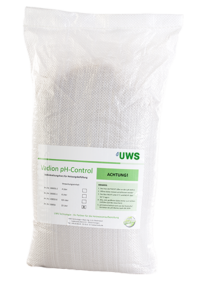
Vadion pH-Control
Our Vadion pH-Control is a mixed-bed resin that not only demineralizes the water to < 100 μS/cm (corresponding to 0–3 °dH), but also ensures that the pH value of the fill water remains within the required range.Go to the product