





As outdoor temperatures rise, data center operations can change faster than conventional performance indicators suggest. While the IT load remains relatively stable, the thermal load on the entire cooling circuit increases.
What operated comfortably within its normal control range in spring may suddenly be operating much closer to its limits in midsummer. This is when the true robustness of a system becomes apparent – and when the importance of consistently monitoring and treating the cooling water becomes clear.
Heat affects the entire hydraulic and thermal balance of the cooling circuit.
Summer Operation Is Not Normal Operation at a Higher Temperature
In practice, operators often view summer as simply a hotter version of normal operation. In reality, the system dynamics change much more significantly than the increase in outdoor temperature alone would suggest.
Cooling towers operate closer to their capacity limits, free cooling may no longer be available at certain times, and temperature differentials reach levels that are rarely seen during the rest of the year. This increases the load on the entire cooling circuit.
One area becomes particularly critical – and often receives less attention than it deserves: the cooling water itself.
Rising temperatures do not only affect physical properties. They also influence chemical reactions and biological processes within the system.
Why Cooling Water Can “Tip” More Quickly in Summer
Cooling water responds sensitively to rising temperatures, and summer conditions make these effects particularly noticeable.
As temperature increases, the solubility of certain substances changes while reaction rates increase. This can accelerate corrosion processes, deposit formation and other undesirable reactions.
Open and semi-open systems face an additional factor: microorganisms can find more favorable conditions for growth. When temperature, nutrient availability and residence time combine unfavorably, biofilms can develop significantly faster.
These problems rarely occur suddenly.
Much more often, the system gradually loses thermal efficiency. Summer simply makes this loss of efficiency more visible.
The Silent Loss of Efficiency in Heat Exchangers
High thermal loads reveal just how sensitive heat transfer is to changes in system conditions. Even thin deposits on heat exchanger surfaces can reduce heat transfer performance and consequently increase the system temperatures required to maintain the desired cooling capacity.
In summer, this effect becomes even more apparent. The already high outdoor temperature masks the additional burden on the system. The system may still appear to be operating stably – but it increasingly requires more energy to do so.
Pumps run for longer periods, valves modulate more frequently, and the cooling system operates continuously in the upper load range.
Without consistent control of the water quality, these effects can intensify over time.
Cooling Water Treatment Creates Stability Reserves
These conditions clearly demonstrate the value of consistent cooling water treatment.
It helps keep the cooling circuit stable even under high thermal loads. When thermal reserves decrease, cooling capacity alone does not determine operational reliability.
The condition of heat exchangers and piping systems also plays a decisive role.
Particle loads, biological activity and chemical instability therefore need to be controlled not only during normal operation. Operators must also maintain stable water quality when the system is running under high load.
Summer conditions can accelerate precisely these undesirable processes.
Water quality therefore becomes a dynamic operating parameter that directly correlates with system load.
Why Heat Makes Existing Weaknesses Visible
Summer does not necessarily cause problems in the first place – it makes existing weaknesses visible.
If deposits are already beginning to form or the water chemistry is becoming unstable, the system is more likely to reveal these weaknesses as its thermal reserve decreases.
What remains inconspicuous in spring can suddenly become a relevant operating factor in midsummer.
The reason is simple: the higher the system’s base load, the less tolerance remains for additional resistance to heat transfer.
Summer operation therefore becomes a stress test for the entire cooling circuit – without requiring any structural change to the system itself.
VDI 6044 as a Guideline
VDI 6044 provides an important technical framework for the operation of cooling systems. During summer operation, however, it is not enough to simply compare measured values against specified limits.
What matters is system stability under dynamic load.
Values that are still within the permissible range on paper may already indicate increasing instability under high thermal loads. If thermal, chemical and biological processes reinforce one another, the situation can deteriorate further.
Operators should therefore look beyond individual guideline values. They need to understand how their system behaves under real-world heat stress.
Conclusion: Summer Is Not an Exceptional Condition – It Is a Reality Check
High outdoor temperatures are a recurring operating condition for data centers. Summer is therefore more than a challenge for cooling technology: it reveals how reliably the entire cooling circuit actually performs.
One factor becomes particularly important in this context: the medium that transports the heat.
As thermal reserves decrease, even minor impairments to heat transfer can affect both efficiency and operational reliability.
Cooling water treatment is therefore not a measure that should only be considered in an emergency.
It creates the conditions needed to keep the cooling circuit stable even as outdoor temperatures rise and thermal reserves decrease.
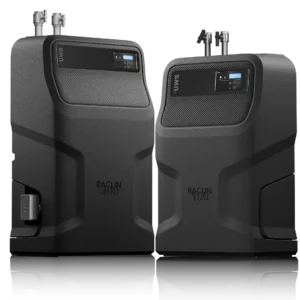
With Racun and the UWS Cloud Portal, operators can continuously monitor cooling water quality and system condition, identify critical changes at an early stage, receive automatic alerts and reliably document system operation.
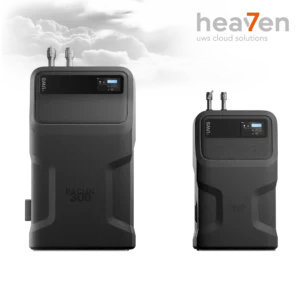
Racun 100 / 300
The Racun series comprises water treatment systems that reliably ensure consistently stable water quality, even in complex and highly sensitive facilities. Wherever system failures can have serious consequences – in industrial plants, hospitals, local heating networks or data centres – Racun offers a level of reliability that sets new standards.Go to the product