




A heating system that becomes “clogged with sludge” is not a rare occurrence—in fact, it’s more the rule than the exception. Often, the problem isn’t noticed until the first symptoms appear: radiators no longer get properly warm, valves respond sluggishly, or pumps run noticeably harder. By this point, however, the process is usually already well advanced.
The actual cause rarely lies in a single fault. Silting up is almost always caused by the interaction of several factors—and that is precisely why it is so often underestimated.
What “sludge” in the heating system really is
When people talk about sludge in practice, they are usually referring to magnetite. This fine, black iron oxide is produced by corrosion processes within the system. Systems with steel or iron components that come into contact with water and—crucially—with oxygen are particularly affected.
The process often begins inconspicuously. Even the smallest amounts of oxygen are enough to trigger corrosion. This oxygen enters the system, for example, via make-up water, leaks, or materials that allow diffusion. The resulting magnetite then spreads throughout the entire heating circuit.
What initially appears to be a slight cloudiness develops into a serious problem over time. The particles deposit in heat exchangers, pumps, and valves, reducing cross-sections and impairing heat transfer. The system loses efficiency—often gradually and unnoticed for a long time.
The actual causes: water quality and operating conditions
In practice, it is repeatedly shown that scaling is rarely a “material problem”. Much more often, the cause lies in water quality and how the system is operated.
A key factor is the conductivity of the heating water. The more dissolved salts present in the water, the more readily electrochemical reactions can occur. This accelerates corrosion. At the same time, the pH value also significantly influences corrosion behavior. If it lies outside the optimal range, protective layers become unstable or do not form at all.
Then there is the issue of makeup water. Every water make-up introduces not only water but also new salts, hardness components, and dissolved gases into the system. Without proper treatment, the chemical equilibrium shifts further and further—a gradual process that leads to increasing sludge buildup over the years.
Why the problem is often recognized too late
A key issue in practice is the lack of transparency. Silting occurs inside the system and remains invisible for a long time. At first, the system appears to function normally, while deposits build up in the background.
Only when components are affected do the first symptoms appear. By this point, the cost of remediation is already significantly higher. Flushing, the replacement of components, or even damage to heat generators are not uncommon.
This is precisely why it is crucial not to wait for symptoms to appear before taking action, but to address the causes early on.
How to specifically prevent scaling
The key lies in controlled water quality and a well-thought-out system strategy. It is crucial that undesirable substances do not remain in the system in the first place.
This is where solutions from the UWS portfolio come into play.
UWS WaterBoy
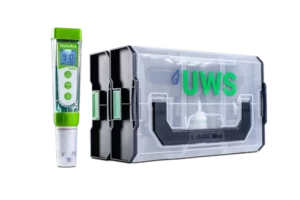
WaterBoy measuring case
The UWS WaterBoy measuring case contains everything the HVAC specialist needs to measure data in accordance with the VDI 2035, ÖNORM H 5195-1 and SWKI BT 102-01 standards in two L-BOXXES.Go to the product
For the actual water treatment, for example, the Vadion pH-Control mixed-bed resin is used. It removes dissolved salts from the water while simultaneously stabilizing the pH value. This creates the foundation for a low-corrosion system.
In existing systems or during ongoing operation, treatment via a bypass is recommended, for example using the Heaty Ferriline No. 2. This allows the system to be continuously improved without interrupting operation. Existing contamination is gradually reduced.
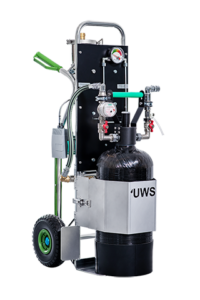
Heaty Ferriline No. 2
Complete unit for professional bypass treatment, sludge and magnetite filtration in the hot water area incl. MAGella twisterGo to the product
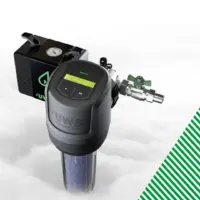
Another critical point is makeup water. Here, Heaty Complete PROfessional ensures that only treated water enters the system. At the same time, the system monitors make-up water volumes and detects anomalies early on—a key component in limiting the reintroduction of oxygen and salts.
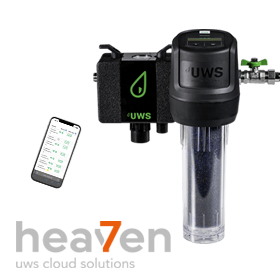
Heaty Complete PROfessional
Heaty Complete PROfessional is the world’s first smart IoT make-up system, including Cloud connection – fully automatic, leakage protection and digital water meter.Go to the product
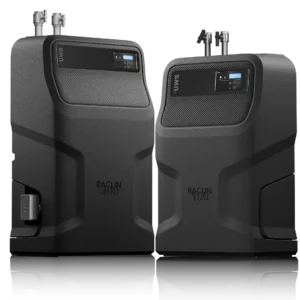
For larger systems or applications with higher requirements, the RACUN series offers an integrated solution. It combines treatment, monitoring, and system analysis, enabling deviations in operation to be detected and addressed early on.
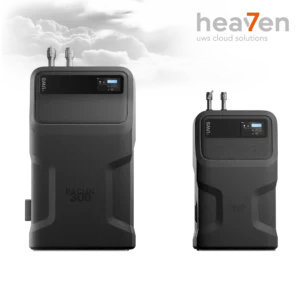
Racun 100 / 300
The Racun series comprises water treatment systems that reliably ensure consistently stable water quality, even in complex and highly sensitive facilities. Wherever system failures can have serious consequences – in industrial plants, hospitals, local heating networks or data centres – Racun offers a level of reliability that sets new standards.Go to the product
Conclusion: Scaling is no accident
When a heating system becomes sludged up, it is not a sudden event, but the result of a long-term process. Corrosion, water quality, and operating conditions interact and lead to deposits in the system over time.
The good news: This process is controllable.
Those who understand water quality, check it regularly, and take targeted action can not only reduce sludge buildup but, in many cases, prevent it entirely. The key is to act early—before fine particles turn into a tangible problem.
Because in the end, the following applies: “
” It is not the sludge that is the cause—but rather what causes it to form.