




When a heating system no longer gets properly warm, the cause is rarely a single component. In practice, it is more often a combination of hydraulic, mechanical, and—particularly often underestimated—water chemistry factors.
The latter, in particular, develop gradually. The system is running, and heat is somehow reaching the rooms—but no longer at the desired quality. Rooms don’t get properly warm, heating times increase, and individual heating surfaces fall significantly short of their performance. This is precisely where the actual analysis begins.
When heat is no longer being transferred
At the heart of every heating system is heat transfer: energy is carried from the heat generator to the consumers via the heating water. For this to work, two conditions must be met. The water must be able to circulate unimpeded, and the heat must be efficiently transferred from the surfaces to the room.
As soon as one of these two factors is disrupted, the perceived heating output decreases. This often does not happen abruptly, but over a longer period of time. The system gradually “loses” its effectiveness, so to speak.
A classic example is deposits in the system. Magnetite, lime, or other residues tend to settle in narrow cross-sections—such as in heat exchangers, valves, or pumps. This reduces the flow rate, and heat can only reach certain areas of the system to a limited extent.
The invisible roadblock: deposits in the system
Magnetite, a fine iron oxide formed by corrosion processes, is particularly problematic. It spreads throughout the heating circuit and settles where flow velocities are low or components are sensitive.
The problem here is not just the narrowing of pipes. Magnetite also acts as an insulator. Heat exchanger surfaces lose efficiency because a kind of “separating layer” forms between the metal and the heating water. The heat remains in the system—but no longer reaches the room.
Limescale can also exacerbate this effect. Even thin layers are enough to measurably impair heat transfer. In practice, this means the system has to run longer to reach the same room temperature—or may not reach it at all.
When water chemistry becomes unbalanced
In most cases, these deposits are not caused by a single factor, but rather by changes in water quality. Heating water is not a static medium. It reacts to external and internal influences—such as makeup water, oxygen ingress, or material reactions.
If conductivity increases, the susceptibility to corrosion increases. If the pH value falls outside the optimal range, protective layers become unstable or dissolve. Together, these factors accelerate processes that ultimately lead to sludge buildup and deposits.
The key point here is that these changes occur gradually. The system continues to function—but with decreasing efficiency. This is precisely why the cause is often not identified until it is too late.
Hydraulics or water quality? In practice, often both
When radiators don’t get warm enough, the hydraulics are often checked first. Hydraulic balancing, correctly adjusted valves, and adequate pump capacity are undoubtedly essential.
In many cases, however, it turns out that even a properly adjusted hydraulic system cannot function effectively if the system is internally “clogged”. Deposits alter flow conditions, block components, and distort the system’s actual design.
This means that while the symptoms appear to be hydraulic in nature, their root cause lies in water quality.
Transparency as a starting point: measuring instead of guessing
A crucial step in practice is to make the condition of the heating water visible in the first place. Without reliable measurement data, any action remains, to some extent, speculation.
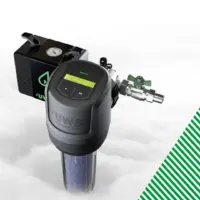
With the UWS WaterBoy, key parameters such as pH and conductivity can be measured directly on-site. This quickly reveals whether the water chemistry is within the intended range or if deviations already exist that could lead to problems in the long term.
This transparency is the foundation for every further decision regarding the system.
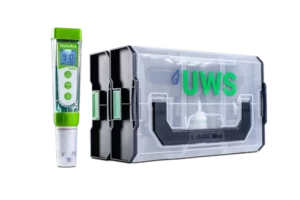
WaterBoy measuring case
The UWS WaterBoy measuring case contains everything the HVAC specialist needs to measure data in accordance with the VDI 2035, ÖNORM H 5195-1 and SWKI BT 102-01 standards in two L-BOXXES.Go to the product
Targeting existing problems
If deposits are already present, it is not enough to simply treat the symptoms. It is crucial to reduce the cause and gradually return the system to a stable state.
One option is continuous treatment in the bypass, for example with Heaty Ferriline No. 2. This desalinates and improves the heating water during operation. Dissolved substances are reduced, and the basis for further corrosion processes is eliminated.
In addition, the mixed-bed resin Vadion pH-Control ensures that the water quality is specifically adjusted and stabilized. As a result, both the conductivity and the pH value remain within a range that is material-compatible and ensures reliable operation.
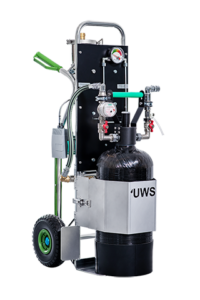
Heaty Ferriline No. 2
Complete unit for professional bypass treatment, sludge and magnetite filtration in the hot water area incl. MAGella twisterGo to the product
The often underestimated role of makeup water
One point that is frequently overlooked in practice is makeup water. Every makeup feed introduces new water into the system—and with it, new salts, hardness components, and dissolved gases.
If this process occurs unchecked, water quality deteriorates continuously. Even a system that was previously optimally adjusted can gradually “tip over” again.
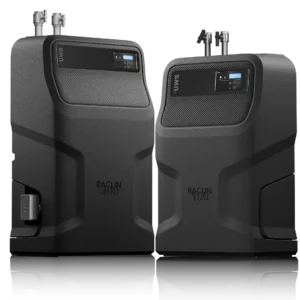
With the Heaty Complete PROfessional, this very issue becomes manageable. The system ensures that only treated water is replenished, monitors the quantities, and detects anomalies early on. This keeps the water quality stable in the long term once it has been achieved.
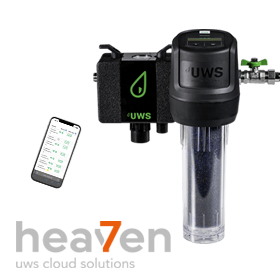
Heaty Complete PROfessional
Heaty Complete PROfessional is the world’s first smart IoT make-up system, including Cloud connection – fully automatic, leakage protection and digital water meter.Go to the product
Conclusion: If the heating system isn’t getting warm, it’s worth taking a look inside the system
A heating system that no longer heats up properly is showing a symptom—not the cause. In many cases, the cause lies deeper within the system and has developed over a long period of time.
Deposits, changes in water chemistry, and uncontrolled makeup water all interact and result in heat no longer reaching where it is needed.
Anyone who understands these interrelationships quickly realizes: It’s not just about checking individual components, but about looking at the system as a whole. That is exactly where the solution lies—and with it, the desired heat output is restored.