




When servicing a heating system, the focus is usually on the heat generator, the control system and safety-related components. However, the heating water also deserves a permanent place on the maintenance checklist. Its condition affects how reliably and efficiently a heating system operates – and how well it is protected against corrosion, deposits and the resulting damage.
Changes in water parameters often go unnoticed for long periods during operation. At the same time, they can provide important indications of problems within the system: unusual conductivity levels may indicate make-up water that does not comply with VDI 2035 requirements, changes in pH value can compromise corrosion protection, and magnetic residues may point to corrosion processes within the system circuit.
Regular water quality checks help identify such changes at an early stage, allowing appropriate action to be taken before they develop into more serious problems. This does not require an unnecessarily complicated procedure, but rather clearly defined inspection points, suitable measuring equipment and reliable documentation.
This article explains which checks should be carried out during routine heating system maintenance, how specialist contractors can interpret the results and when further investigation or water treatment may be advisable. The checklist at the end summarises the key points for practical use on site.
Why water quality should be checked during every maintenance visit
VDI 2035 sets out requirements and recommendations for preventing damage caused by scale formation and water-side corrosion in heating systems. It therefore provides an important basis for assessing heating water quality. The specific requirements depend, among other things, on the materials used, the system configuration and the operating conditions.
Water quality can change during operation. Every addition of untreated make-up water introduces additional water and potentially dissolved salts and hardness-forming substances into the system circuit. Corrosion processes, unsuitable water treatment measures or changes in operating conditions can also affect water chemistry.
The potential consequences range from limescale deposits on heat transfer surfaces to corrosion, magnetite-containing deposits and sludge formation. Such changes can impair heat transfer, put strain on system components and increase maintenance and repair requirements.
This is why heating water quality should not only be checked when the system is initially filled. Monitoring current values and their development over time is equally important during subsequent maintenance visits. These checks become particularly meaningful when the results are compared with previous measurements.
Documented water quality also helps provide a clear record of the work carried out. This is important when dealing with warranty issues and potential future damage investigations. Regular checks alone cannot guarantee that no damage will occur, but they provide a reliable basis for the professional maintenance and management of heating systems.
The inspection process: Step by step
1. Visually inspect the water sample
Before using measuring instruments such as our WaterBoy, it is worth taking a close look at the system water. Its appearance can already provide initial indications of contamination and changes within the system. However, visual inspection does not replace measurements or a more comprehensive water analysis.
The following characteristics are particularly relevant:
- Colour: Black or dark grey discolouration may indicate magnetite and other corrosion products. Brownish discolouration can, for example, be caused by iron oxides.
- Cloudiness and particles: Suspended solids or visible deposits indicate contamination in the system water. The underlying cause should be investigated further.
- Odour: An unusual or foul smell may indicate specific chemical or microbiological processes. However, odour alone is not sufficient to establish a reliable diagnosis.
Observations should be documented and compared with previous findings, if available. Even an unremarkable water sample provides useful information for the system’s maintenance history.
2. Measure the pH value
The pH value indicates the acid-base condition of the heating water and is an important parameter when assessing corrosion risk. The applicable requirements depend on the relevant guidelines and the materials used in the heating system.
For many heating systems, VDI 2035 specifies a pH range of 8.2 to 10.0, or 8.2 to 9.0 for systems containing aluminium components. The specific requirements of the guideline and any additional manufacturer specifications must always be taken into account.
A suitable measuring instrument, such as the WaterBoy, allows the pH value to be measured and documented directly on site.
What do the measurement results mean?
- pH value below the required range: This can compromise corrosion protection. Check the materials used, previous water treatment measures and possible causes of the change.
- pH value within the required range: The reading is initially unremarkable. Nevertheless, it should be assessed together with conductivity and the other findings.
- pH value above the required range: Check whether water treatment, additives or other factors have altered the water chemistry. Particular care is required in systems containing aluminium components.
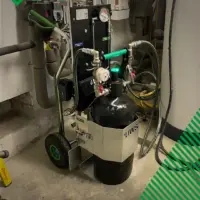
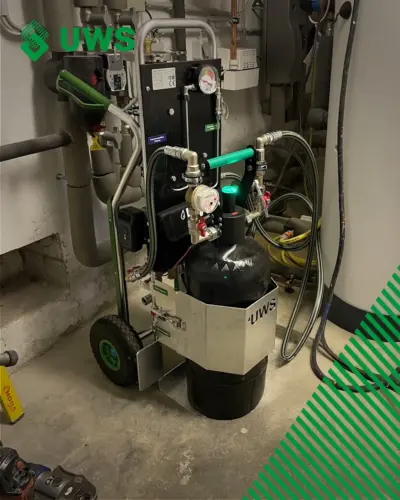
If deviations are found: Targeted treatment of the existing system water using a bypass process may be advisable, for example with a Heaty Ferriline and our Vadion pH-Control mixed-bed resin. Whether treatment is necessary, and which approach is appropriate, depends on the underlying cause and the other water parameters.
3. Measure electrical conductivity
Electrical conductivity indicates how well water conducts electricity. It is largely influenced by dissolved ions and therefore provides information about the salt content of the heating water.
The interpretation of the measured value depends on the selected operating method. With low-salt operation, the electrical conductivity of the heating water is in the range of 10 to below 100 µS/cm. Different reference values apply to salt-containing operation. A measurement should therefore always be assessed in the context of the intended system operating conditions.
What do the measurement results mean?
- Conductivity within the specified range: Water quality is initially unremarkable with regard to this parameter.
- Significantly increased conductivity during low-salt operation: Possible causes include repeated make-up water additions without sufficient treatment, unsuitable filling water or substances introduced through water treatment.
- Changes compared with previous measurements: Even if a reference value has not been exceeded, a significant increase may indicate a change within the system.
If deviations are found: First, check the make-up water volumes and previous water treatment measures. Once the cause has been identified, appropriate treatment of the existing system water may be necessary.
The WaterBoy enables pH value and conductivity to be checked directly at the heating system. This means that important measurement data for assessing heating water quality is already available during routine maintenance.
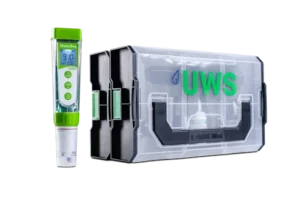
WaterBoy measuring case
The UWS WaterBoy measuring case contains everything the HVAC specialist needs to measure data in accordance with the VDI 2035, ÖNORM H 5195-1 and SWKI BT 102-01 standards in two L-BOXXES.Go to the product
4. Assess total hardness and the risk of scale formation
Total hardness primarily describes the concentration of calcium and magnesium ions in water. Under suitable conditions, these hardness-forming substances can lead to limescale deposits. This is particularly relevant when filling or replenishing a heating system, as additional hardness-forming substances may enter the system.
The requirements for filling and make-up water depend, among other factors, on system volume, heat output and other operating conditions in accordance with VDI 2035. There is therefore no single hardness value that applies equally to every heating system, regardless of its configuration.
During maintenance, the first step is to check whether the quality of the filling and make-up water meets the applicable requirements. If findings are unusual or there is a known history of problematic make-up water, an additional hardness measurement may be advisable.
If values are elevated or scale formation is suspected: Check the original filling process, make-up water supply and existing water treatment concept. Suitable demineralisation may be required. For bypass treatment of existing system water, we recommend, depending on the initial conditions, for example the Heaty Ferriline No. 2 or the Heaty Profiline No. 2.
It is important to distinguish between the hardness of the filling water and the water quality within the existing heating circuit.
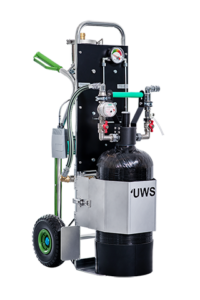
Heaty Ferriline No. 2
Complete unit for professional bypass treatment, sludge and magnetite filtration in the hot water area incl. MAGella twisterGo to the product
5. Check the make-up water supply
Make-up water is an important inspection point because every additional water input can affect the quality of the system water. Repeated make-up water additions may also indicate water losses, leaks or problems with the pressure maintenance system.
If an automatic make-up water unit is installed, it is therefore important to check not only the unit’s functionality, but also the recorded water volumes and the frequency of make-up water additions.
In particular, check the following:
- Make-up water volume and frequency: How much water has been added since the last maintenance visit? Are there any noticeable changes compared with previous periods?
- Treatment capacity: Is the treatment material still effective, or does the resin need replacing?
- Backflow prevention: Is the required protection against backflow ensured in accordance with applicable requirements, particularly DIN EN 1717?
- Pressure maintenance and system tightness: Are there any indications of water losses or other causes of increased make-up water demand?
If irregularities are found: Increased water consumption may indicate a leak, but it is not necessarily caused by a leak. It is also important to check whether the make-up water is being treated in accordance with the system’s design and requirements.
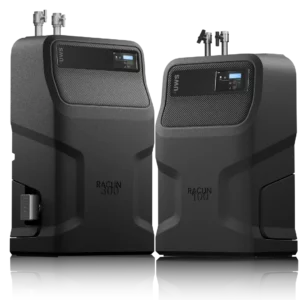
The Heaty Complete PROfessional can record make-up water data and, when appropriately connected, make it accessible remotely via the UWS Cloud Portal. If make-up water volumes are unusually high or the mixed-bed resin treatment capacity is exhausted, the system can generate a corresponding notification. This allows specialist contractors to respond to relevant changes before the next scheduled maintenance visit.
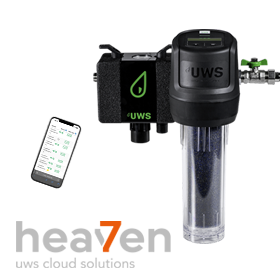
Heaty Complete PROfessional
Heaty Complete PROfessional is the world’s first smart IoT make-up system, including Cloud connection – fully automatic, leakage protection and digital water meter.Go to the product
6. Inspect and clean the magnetite separator
Magnetite forms as a corrosion product and can circulate in the system water or accumulate in suitable locations. In heating systems, such residues can put strain on pumps, valves and heat transfer surfaces, among other components. A magnetite separator helps remove magnetic particles from the circulating water.
If a MAGella magnetite separator is installed, its functionality and level of contamination should be checked during maintenance.
Pay attention to the quantity and condition of the collected residues. Comparing the findings with those from previous maintenance visits can help identify changes in the condition of the system.
- Small amounts of residue: Document the findings and continue with regular inspections.
- Noticeably large amounts of residue: Check whether the quantity has increased compared with previous maintenance visits and investigate possible causes.
- Repeated heavy contamination: Further investigation of the water quality and corrosion conditions may be necessary.
The amount of magnetite collected provides a useful indication, but on its own it does not allow a reliable assessment of the current corrosion rate throughout the entire system.
If no magnetite separator is installed and the water sample or other findings indicate the presence of magnetic residues, retrofitting a MAGella magnetite separator and/or using a mobile filtration solution such as the Heaty Filtra may be a suitable measure. The appropriate approach and product configuration depend on the specific requirements of the heating system.
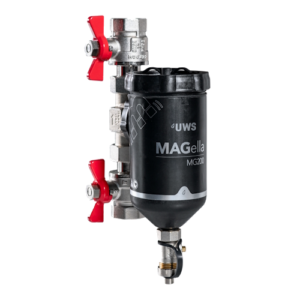
MAGella MG
The MAGella MG 200 magnetite and sludge separator mounted on the return pipe of the boiler protects the system from all types of contamination.Go to the product
7. Document and compare measurement results
A measurement initially provides only a snapshot of the current situation. Only by documenting and comparing the results with previous measurements is it possible to identify changes in water quality over a longer period.
Relevant measurement values, the condition of the water sample, inspection findings and all measures carried out should therefore be recorded. These may include cleaning the magnetite separator, replacing the treatment material or identifying irregularities in the make-up water supply.
The free WaterBoy app supports the digital recording of measurement values with the WaterBoy and the creation of guideline-compliant PDF reports. This enables specialist contractors to document their findings clearly and make them available for future maintenance visits.
Comparing the results with measurements from previous years is particularly useful. This makes changes visible that might otherwise go unnoticed when individual measurements are considered in isolation. At the same time, it provides a reliable basis for explaining the condition of the heating system and any necessary measures to the operator.
Heating system maintenance checklist: The key inspection points at a glance
The following overview summarises the essential checks. It serves as a practical working aid and does not replace an assessment tailored to the specific heating system in accordance with applicable guidelines and manufacturer specifications.
| Inspection point | What should be checked? | What to do if irregularities are found |
| Water sample | Colour, cloudiness, visible particles and odour | Identify the cause and carry out a water analysis if necessary |
| pH value | Measurement result and system-specific requirements | Check materials, water treatment and possible causes |
| Electrical conductivity | Measurement result in relation to the intended operating method | Check make-up water and water treatment; consider bypass treatment if necessary |
| Total hardness | Filling and make-up water and, if required, system water | Check hardness input and water treatment concept |
| Make-up water supply | Water volume, frequency, treatment capacity and backflow prevention | Investigate water losses and check make-up water unit functionality |
| Magnetite separator | Functionality, contamination and amount of collected residue | Clean the separator, document findings and investigate corrosion causes if necessary |
| Documentation | Measurement values, findings and measures carried out | Complete missing information and record follow-up measures |
Practical Tip: The most meaningful maintenance documentation is created when specialist contractors record not only individual measurement values, but also the operating conditions, irregularities and measures carried out. This makes it easier to assess changes and provides a more reliable basis for future decisions.
Conclusion: Heating water checks as an integral part of system maintenance
Heating water quality has a significant impact on how reliably and efficiently a heating system operates. Regular checks help identify changes at an early stage, narrow down potential causes of damage and initiate appropriate measures.
Specialist contractors do not need to carry out a comprehensive water analysis during every maintenance visit. What matters is a structured procedure: inspect the water sample, measure the relevant parameters, check the make-up water supply and installed separators, and document all results clearly. If irregularities are identified, a targeted investigation should follow to determine the appropriate course of action.
The WaterBoy supports the measurement of key water parameters, while the WaterBoy app simplifies documentation. Depending on the findings, suitable solutions for filtration, heating water treatment and make-up water supply are available for further treatment and system optimisation.
This makes water quality testing an integral part of professional heating system maintenance – providing traceable results, targeted measures and clear added value for both specialist contractors and system operators.