




A heating system can be as modern and efficient as possible, but if the wrong water is introduced during replenishment, water quality can quickly become a problem.
In practice, it is quite common to hear: “The system is a little low on water – let’s quickly top it up.” This may sound harmless, but over time, it can put the entire heating system under strain.
With every litre of untreated tap water, new hardness-forming substances, dissolved salts and oxygen enter the heating circuit. The water quality changes – and so do the operating conditions for heat generators, pumps, valves and pipework.
Anyone who wants to maintain water quality over the long term must therefore look beyond the initial filling. Every subsequent replenishment matters, too.
Why Replenishment Matters
When a heating system is commissioned, it should generally be filled in accordance with the applicable requirements, the water quality checked and the filling water treated appropriately for the system.
This creates the conditions for reliable and trouble-free operation.
However, this water quality does not automatically remain stable. If water needs to be added later and untreated drinking water is used, hardness-forming substances and dissolved salts are once again introduced into the heating circuit.
Every replenishment can therefore change the water quality again.
The problem is that the consequences do not appear immediately. Deposits, corrosion and corrosion products develop gradually and can impair the efficiency and operational reliability of the system over time.
The service life of a heating system therefore depends not only on the quality of the initial fill. What matters is maintaining the required water quality throughout ongoing operation.
Consequence 1: Limescale Deposits Reduce Heat Transfer
If the replenishment water contains too many hardness-forming substances, limescale deposits can form. These tend to accumulate on heat-stressed components such as heat exchangers.
Even thin layers of limescale can act as insulation between the heating water and the heat generator.
Possible consequences include:
- reduced heat transfer
- increased energy consumption
- longer operating times
- lower system efficiency
- increased stress on individual components
Modern condensing boilers and heat pumps in particular can be sensitive to deposits, as their heat exchangers often feature very narrow flow channels.
Consequence 2: High Conductivity Can Promote Corrosion
Water hardness is not the only factor that matters. The electrical conductivity of the heating water is also an important parameter when assessing water quality.
Drinking water contains various dissolved salts and minerals. When these are introduced into a heating system through repeated replenishment with untreated water, the conductivity of the system water can increase.
Higher conductivity can accelerate electrochemical corrosion processes and increase the risk of material damage. This is why VDI 2035 recommends low-salt or fully demineralised operation for many heating systems.
Anyone replenishing a heating system should therefore not simply add tap water – but use water with a quality appropriate for the system.
Consequence 3: Corrosion Products and Sludge Put Strain on the System
Corrosion products do not necessarily remain where they are formed.
They are transported through the system with the heating water and can accumulate in heat exchangers, pumps and valves, for example. Magnetite can be particularly problematic.
The consequences range from poorer heat distribution and increasing pressure losses to malfunctions of individual components.
What starts as a small amount of replenishment water can therefore become a problem for the entire system over time.
Frequent Replenishment? Something Is Wrong.
If a heating system regularly loses water, simply topping it up again and again is not the solution.
Frequent replenishment is a warning sign. Possible causes include leaks, problems with the expansion vessel or issues with pressure maintenance.
Adding more water does not solve the underlying problem.
The rule is simple: check the water loss, identify the cause and monitor the replenishment process.
Automated Replenishment with Treated Water
Proper heating water treatment does not end with the initial filling. Water used for subsequent replenishment should also be treated according to the requirements of the system.
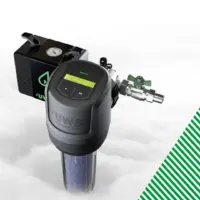
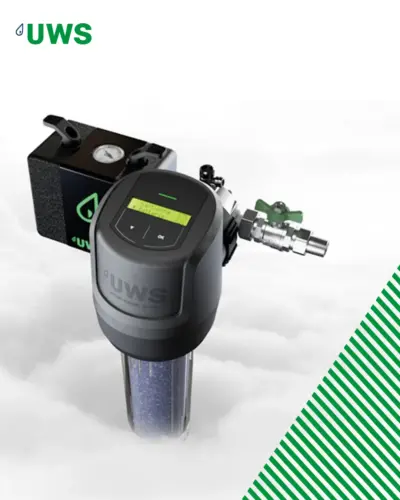
This is exactly where the Heaty Complete PROfessional comes in.
The automatic replenishment system combines controlled water replenishment with appropriate water treatment. This prevents untreated drinking water from simply being introduced into the heating system.
At the same time, the system monitors the replenishment process and uses its integrated leak protection to prevent uncontrolled water loss. If defined limit values are exceeded, replenishment is automatically stopped. System operators or HVAC professionals then receive a corresponding notification via the UWS Cloud Portal.
This turns simple “topping up” into a controlled and monitored process:
- Replenish with treated water in a controlled manner
- Monitor replenishment volumes
- Detect leaks
- Receive alerts
- Document operation
Another major benefit: Proactive communication helps minimise unnecessary service visits by enabling targeted call-outs. The automatic eSIM connection to the UWS Cloud Portal provides a comprehensive overview of all replenishment processes and customer systems. Cartridge replacement status, software updates and device history can be accessed at any time. This enables problems to be detected at an early stage and resolved quickly and efficiently.
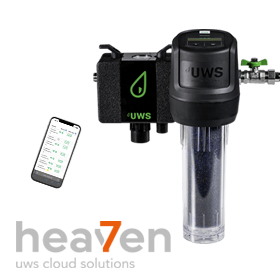
Heaty Complete PROfessional
Heaty Complete PROfessional is the world’s first smart IoT make-up system, including Cloud connection – fully automatic, leakage protection and digital water meter.Go to the product
Keeping Water Quality in View During Operation
Reliable replenishment is an important part of maintaining water quality. However, anyone who wants to keep a heating system’s water quality under control over the long term should also check it regularly.
Suitable measuring devices such as the WaterBoy can be used to check parameters such as the electrical conductivity and pH value of the system water. The WaterBoy app guides users through the measurement process and directly creates a corresponding measurement report.
But digitalisation does not end with the measurement itself:
Measurement data from the WaterBoy app can be automatically documented in the UWS Cloud Portal. Measurement reports, system information and system notifications are brought together in one central location. This creates continuous digital documentation of both water quality and system condition.
This not only provides greater transparency. It also makes regular monitoring easier and allows changes to be tracked over time.
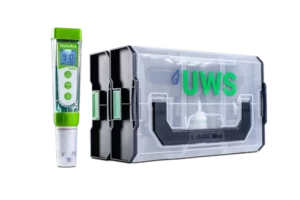
WaterBoy measuring case
The UWS WaterBoy measuring case contains everything the HVAC specialist needs to measure data in accordance with the VDI 2035, ÖNORM H 5195-1 and SWKI BT 102-01 standards in two L-BOXXES.Go to the product
Don’t Wait Until It’s Too Late – Take Proactive Action
This is where the decisive advantage of a connected solution comes in:
Instead of checking systems only during scheduled maintenance visits, relevant changes can also be detected between service appointments.
The Heaty Complete PROfessional provides information on replenishment processes, leaks, device status and the capacity of the mixed-bed resin cartridge in use. If action is required, the system proactively provides a notification. This allows service visits to be planned more efficiently instead of reacting only after a problem has already occurred.
The UWS Cloud Portal brings all this information together: WaterBoy measurement data, Heaty Complete PROfessional data and other system notifications are available centrally.
Measure, treat, replenish, document – and know when action is required.
Conclusion: Keep Water Quality Under Control
Incorrect replenishment water generally does not cause visible damage overnight. That is precisely what makes the issue so tricky.
Limescale deposits, increased conductivity, corrosion and magnetite develop gradually. Over time, they can affect the efficiency, operational reliability and service life of the heating system.
Anyone who wants to maintain water quality over the long term should therefore monitor not only the initial filling, but also every subsequent replenishment and changes in water quality during ongoing operation.
The Heaty Complete PROfessional automates, monitors and documents the replenishment process. The WaterBoy supports regular analysis of the system water. The UWS Cloud Portal brings all this information together – including proactive alerts whenever action is required.
Anyone who keeps water quality under control can identify changes at an early stage and take action before a small problem turns into a major one.