


Preventing corrosion: How to protect heating systems long-term and avoid damage
Corrosion is one of the most common—and at the same time most expensive—causes of damage in heating systems.
It develops quietly, insidiously, and often goes unnoticed for a long time. By the time the first signs become visible, the damage is usually already well advanced.
Yet corrosion is not an inevitable fate.
It is the result of specific environmental conditions—and can therefore be specifically prevented if these conditions are properly managed from the start.
Corrosion is not a coincidence, but chemistry
In heating systems, water is not a neutral filler but a chemically active operating medium.
It is in constant contact with metals, seals, and heat exchangers and affects their condition over the years.
Corrosion always occurs when:
- the heating water is chemically unstable
- unfavorable pH values are present
- conductivity is too high
- Oxygen enters the system
These processes occur continuously—regardless of whether the system is currently operating at full load or partial load.
Why modern heating systems are particularly sensitive
Modern heating systems operate more efficiently, are more compact, and involve more complex materials than earlier systems.
This has many advantages—but at the same time increases the demands on water quality.
Common examples today include:
- Aluminum or stainless steel heat exchangers
- mixed materials in the piping network
- High temperature differentials
- Low water volumes
These systems are significantly more sensitive to chemical imbalances.
Corrosion does not progress more slowly here—but is often more targeted and destructive.
Conductivity: the underestimated driver of corrosion
Electrical conductivity describes how many dissolved ions are present in the water and how well the water can conduct electrical currents.
It is therefore a direct indicator of the water’s “activity level” from an electrochemical perspective.
The higher the conductivity, the more dissolved salts—and thus potentially reactive components—are present in the system.
The water becomes more conductive—and at the same time more reactive.
The result: electrochemical processes proceed faster and more intensely.
In practice, this means:
- increased susceptibility to corrosion throughout the system
- intensified electrochemical reactions on metallic surfaces
- Accelerated material degradation, particularly on sensitive components
High conductivity is particularly critical in systems with different materials.
For example, when steel, copper, or aluminum come into contact with one another, galvanic cells can form. The conductivity of the water acts as a “transport medium” for electrical charges and further intensifies these processes.
What happens in detail:
Electrical voltages arise between the metals, which are balanced out by the conductive water. In the process, metal ions are released from less noble materials—corrosion occurs.
This is precisely why conductivity is not a “secondary factor,” but a key control parameter in heating and cooling water systems.
If you don’t keep an eye on conductivity, you lose control over the electrochemical processes in the system.
Or to put it another way:
👉 Conductivity significantly determines how “aggressive” water is within the system.
The targeted reduction and continuous control of conductivity is therefore a crucial component for sustainably preventing corrosion and ensuring the system’s service life.
The pH value determines material compatibility
The pH value is one of the key control parameters in heating and cooling water systems.
It determines whether water has a neutral, protective, or corrosive effect on the materials used.
It is important to understand that:
The pH value does not act in isolation, but always in conjunction with conductivity, materials, and operating conditions. Even small deviations can have significant long-term effects—often without the system initially showing any noticeable reaction.
This is precisely what makes the pH value so critical.
If it falls outside the recommended ranges, insidious processes develop that only become apparent after a delay. The system appears to be running stably, while material corrosion is already taking place in the background.
Typical risks include:
- pH value too low
→ increased solubility of metals
→ increased corrosion, especially in steel and iron - pH value too high
→ Attack on sensitive materials such as aluminum
→ Damage to seals and non-metallic components
This becomes particularly problematic in mixed systems. Different materials react with varying degrees of sensitivity to pH deviations. A value that is not critical for one material may already be harmful to another.
This is precisely why blanket target values often fall short in practice.
The optimal pH range always depends on:
- the materials used
- the system configuration
- the applicable guidelines (e.g., VDI 2035)
Maintaining a stable pH value is therefore not a one-time measure, but an ongoing task in plant operation.
Or to put it another way:
👉 The pH value determines not only the water quality—but also whether materials are protected or corroded.
The targeted adjustment and long-term stabilization of the pH value is thus a key factor for material compatibility and the service life of the entire system.
Oxygen: the catalyst in the system
Oxygen is one of the most potent drivers of corrosion.
It enters the heating system through:
- Filling
- Make-up
- Leaks
- open system components
Even small amounts are sufficient to trigger corrosion processes.
The combination of oxygen and high conductivity is particularly critical.
Preventing corrosion therefore also means:
- Minimize makeup water
- Ensuring tightness
- Maintaining stable water quality
Make-up water as a common source of error
Many heating systems are initially filled correctly—but gradually lose water quality during operation.
The most common reason for this is uncontrolled makeup water.
Every liter of untreated water introduces:
- new salts into the system
- additional oxygen
- changes in pH levels
These inputs do not have a one-time effect, but rather a cumulative one. Over months and years, conductivity increases, the pH value drifts, and corrosion processes are accelerated.
It is particularly critical that makeup water is rarely documented or monitored in practice.
Even a professionally performed initial filling is thus gradually rendered ineffective.
The only remedy is a consistently planned makeup water concept.
With a solution like Heaty Complete PROfessional, every water top-up is automatically treated and monitored before the water enters the heating circuit.
This keeps water quality stable—regardless of how often or for what reason make-up is performed.
Top-up thus transforms from a risk into a controlled, safe process.
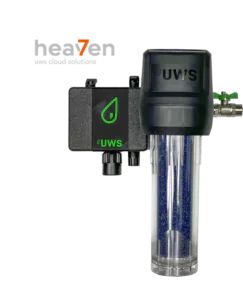
Heaty Complete Professional
Heaty Complete PROfessional is the world’s first smart IoT make-up system, including Cloud connection – fully automatic, leakage protection and digital water meter.To the product
Treatment instead of repair
A common misconception in practice is that
heating water treatment is a measure taken only in the event of damage.
Yet its greatest benefit clearly lies in prevention.
Targeted heating water treatment:
- reduces conductivity
- removes corrosion-promoting salts
- Stabilizes the pH value
- creates operating conditions compatible with the materials
This prevents corrosion processes from occurring in the first place—rather than having to combat them later at great expense.
Treatment units such as the Heaty Ferriline No. 2 are designed precisely for this preventive approach.
They enable controlled desalination and stabilization of the heating water, thereby creating the chemical foundation for long-term, safe system operation.
Those who only react once damage is visible are acting too late.
Those who treat the water early on prevent repairs instead of managing them.
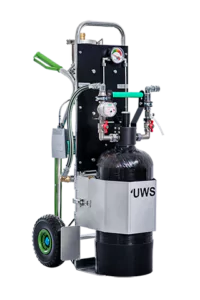
Heaty Ferriline No. 2
Complete unit for professional bypass treatment, sludge and magnetite filtration in the hot water area incl. MAGella twisterTo the product
Regular analysis ensures control
Corrosion does not occur suddenly.
It announces itself through changes in water parameters—long before components fail or malfunctions occur.
Regular heating water analyses enable:
- das frühzeitige Erkennen kritischer Abweichungen
- targeted, timely countermeasures
- Comprehensive documentation of the system’s condition
This transforms corrosion protection from mere damage control into a controlled, predictable process.
What matters here is not just the measurement itself, but its reliability and documentation.
With a measuring device like the WaterBoy, pH and conductivity can be reliably measured and recorded directly in a structured report.
This creates transparency regarding the condition of the heating water—both technically and legally—and changes no longer go unnoticed.
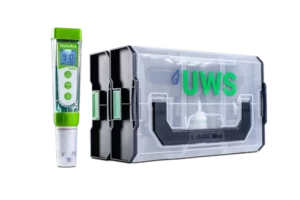
Messkoffer WaterBoy
The UWS WaterBoy measuring case contains everything the HVAC specialist needs to measure data in accordance with the VDI 2035, ÖNORM H 5195-1 and SWKI BT 102-01 standards in two L-BOXXES.To the product
Think holistically instead of treating symptoms
As all solutions from UWS Technologie demonstrate, corrosion can only be permanently prevented if all influencing factors are considered together.
This includes:
- Appropriate water treatment
- Carefully selected materials
- controlled replenishment
- regular analysis
- clean documentation
Individual measures fall short—the key lies in the interplay.
Conclusion: Corrosion prevention is predictable
Corrosion is not an inevitable aging process.
It is the result of unstable water chemistry—and therefore controllable.
Who:
- Treats heating water in a targeted manner
- Keeping an eye on conductivity and pH
- Minimize oxygen ingress
- Controlled replenishment
- Regularly analyzed
creates the basis for:
- Long-lasting heating systems
- Stable efficiency
- Lower maintenance and repair costs
- High operational reliability
Preventing corrosion means taking responsibility for the entire life cycle of the system.

 Contact us