


Heating water treatment for a 20 m³ system: from sludge-clogged to VDI-compliant
It’s not just small heating systems that benefit from professional water treatment. Especially in larger existing systems, deposits, corrosion products, and residues from previous treatments can have a significant impact on operational safety and efficiency. A recent project demonstrates how even heavily contaminated systems can be restored to a standard-compliant condition through a structured approach.
The Initial Situation
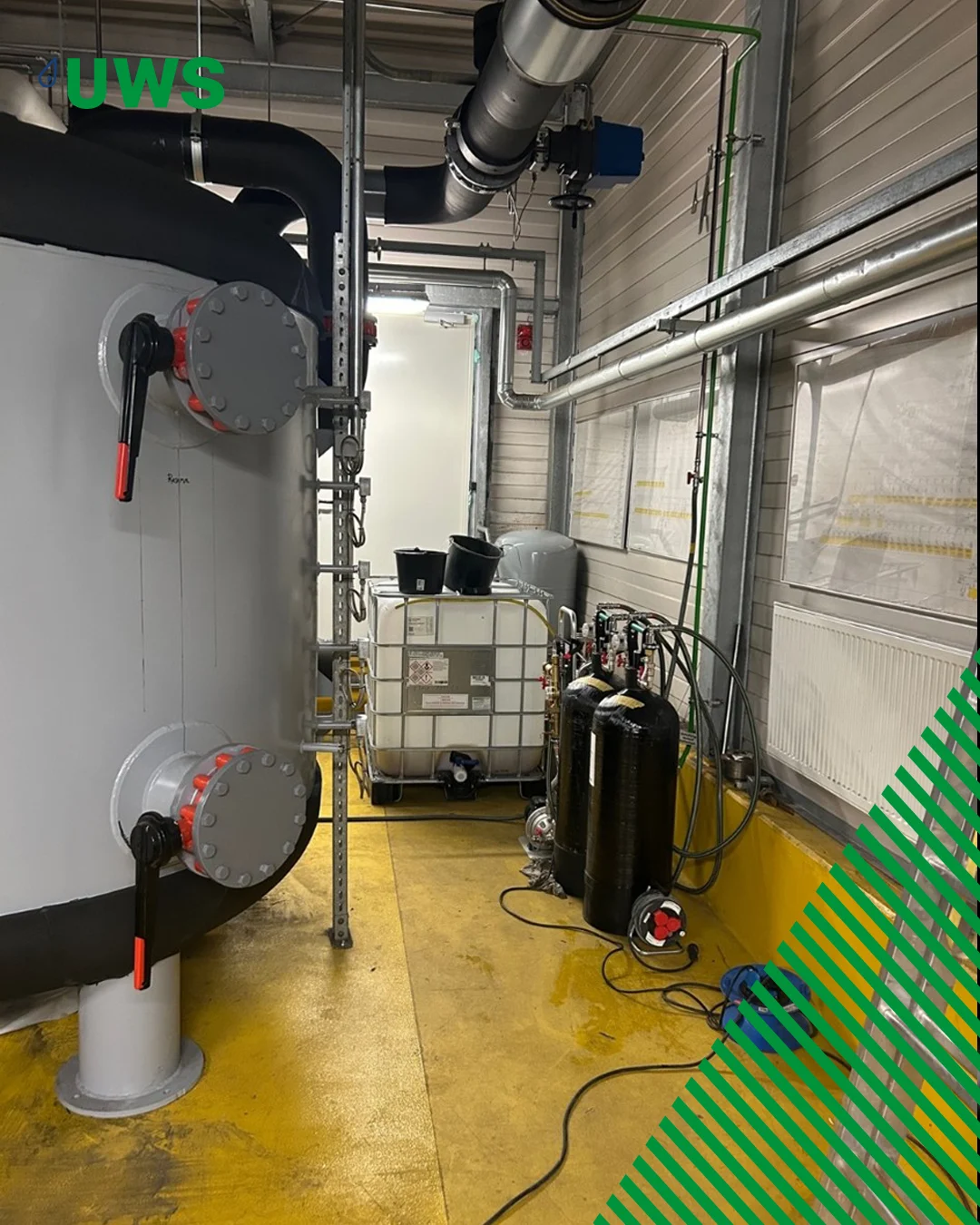
As part of a trade show project, we were commissioned to treat an existing heating system with a system volume of approximately 20 m³.
The system had already been treated with chemical products in the past. Nevertheless, significant contamination was evident in the system. Sludge, deposits, and operational residues had accumulated over time and significantly impaired water quality.
Such contaminants not only pose a risk to heat generators, pumps, and valves. They can also reduce the system’s efficiency, increase energy consumption, and lead to corrosion damage in the long term. The goal was therefore a complete cleaning followed by heating water treatment in accordance with the requirements of VDI 2035.
Step 1: Flushing the heating system
To begin with, the system was completely flushed. The main focus here was on removing the previously used chemical products from the system in a controlled manner and flushing out loose deposits.
This step forms the basis for all further measures. This is because any remaining residues can significantly impair the effectiveness of subsequent cleaning and treatment processes.
Step 2: Chemical cleaning to remove sludge and deposits
After the initial flush, the actual system cleaning was performed using a cleaner specifically developed for heavily silted-up heating systems.
During the reaction phase, magnetite sludge, deposits, and other operational residues were specifically dissolved. The dissolved contaminants were then flushed out of the heating system.
This step is often crucial, especially for existing systems. If deposits are not completely removed, potential sources of malfunction remain in the system and can lead to problems again later.
Step 3: Heating water treatment according to VDI 2035
Only after successful cleaning did the actual heating water treatment take place using UWS solutions.
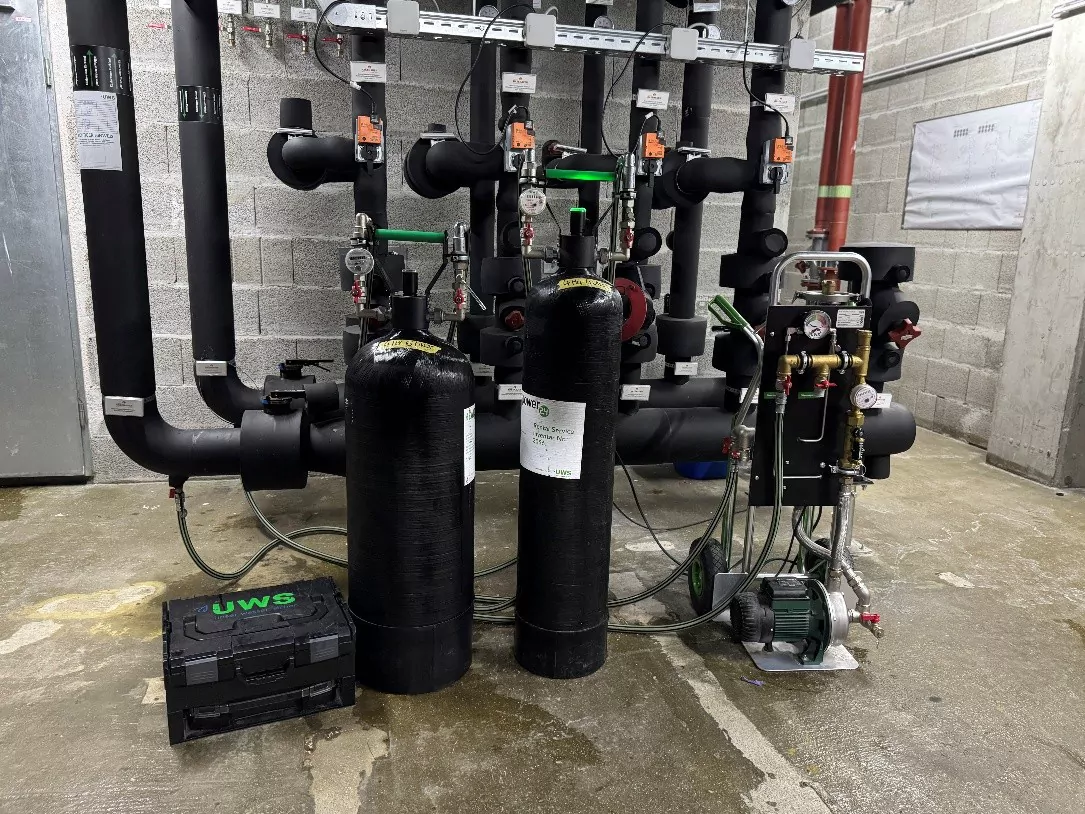
The heating water was specifically adjusted to the required parameters to ensure long-term stable water quality. The treatment was carried out in accordance with the requirements of VDI 2035 with the aim of minimizing corrosion risks, preventing scale formation, and creating optimal operating conditions for the entire system.
By adjusting the water parameters in accordance with the standard, the foundation is laid for long-term efficient and trouble-free system operation.
The result
Through a combination of flushing, chemical cleaning, and subsequent heating water treatment, the 20 m³ plant was successfully brought into a condition that meets operational and regulatory standards.
Existing contaminants were removed, water quality was sustainably improved, and the conditions for safe plant operation were established. At the same time, the risk of corrosion, deposits, and renewed sludge buildup was significantly reduced.
Conclusion
This case study demonstrates that professional heating water treatment involves far more than simply adjusting conductivity or pH levels. Especially for existing systems, a structured approach consisting of flushing, cleaning, and standard-compliant water treatment is crucial for sustainably resolving existing issues.
Through the close collaboration between Heatpower24 and UWS, the required water quality was reliably achieved and ensured for the long term. The result is a system that is optimally prepared for continued operation and offers significantly better conditions for efficiency, operational safety, and value retention.

 Contact us