Water is transparent, tasteless, and seemingly always the same.
However, in heating and cooling systems, this assumption is one of the biggest misconceptions.

From a technical point of view, there is no such thing as neutral water.
Depending on its composition, it can protect systems – or gradually destroy them.

In order to be able to assess heating and cooling water correctly, it is worth taking a closer look at the most important parameters:
conductivity, hardness, pH value, and salt content.

Why water quality is so crucial in technical systems

In heating and cooling systems, water is not a consumable medium, but a permanently circulating operating material.
Everything that is introduced into the system remains there – and continues to have an effect for years.

Unsuitable water quality leads, among other things, to:

The good news:
These effects are not a coincidence, but can be specifically avoided – if you understand the water parameters.

Conductivity – the most important indicator of risks in the system

Electrical conductivity describes how many dissolved ions are present in the water.
The higher the conductivity, the more “active” substances are present in the system.

In practice, this means:

  • high conductivity = high corrosion potential
  • low conductivity = lower electrochemical activity

Conductivity plays a key role, especially with mixed materials (e.g., steel, copper, aluminum).
It is therefore one of the most important measured values in heating water analysis.

Note:
Conductivity is not an abstract laboratory value—it is a direct risk factor for the system.

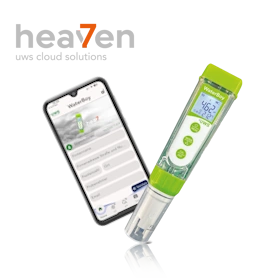
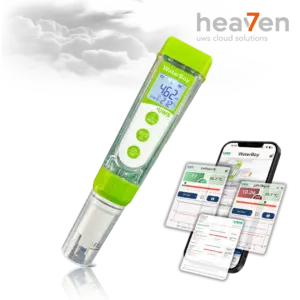
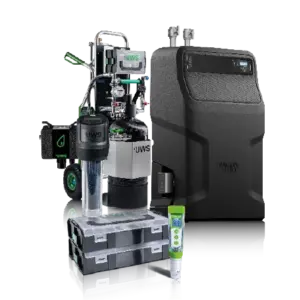
WaterBoy Messkoffer und Messgerät

Messkoffer WaterBoy

The UWS WaterBoy measuring case contains everything the HVAC specialist needs to measure data in accordance with the VDI 2035, ÖNORM H 5195-1 and SWKI BT 102-01 standards in two L-BOXXES.
To the product

Water hardness – well known, but often misclassified

Water hardness describes the content of calcium and magnesium ions.
In drinking water, it is mainly known from households – but in heating systems, it has a different meaning.

High water hardness can lead to:

  • Limescale deposits on heat exchangers
  • Reduced heat transfer
  • Increased energy consumption

However, it is important to note that soft water is not automatically suitable either.
This is because low hardness does not provide any information about salt content or conductivity.

Hardness is therefore only part of the truth —not the whole picture.

pH value – the silent driver of chemical processes

The pH value determines whether water reacts acidically, neutrally, or alkalinely.
In technical systems, it has a significant influence on:

  • Corrosion behavior
  • Material compatibility
  • Stability of water chemistry

An incorrect pH value can:

  • promote metal dissolution
  • destroy protective coatings
  • promote selective corrosion

Particularly important:
The optimum pH value always depends on the material mix of the system.
Flat-rate target values can quickly lead to confusion here.

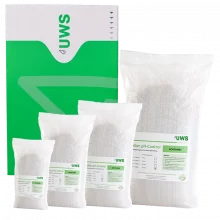
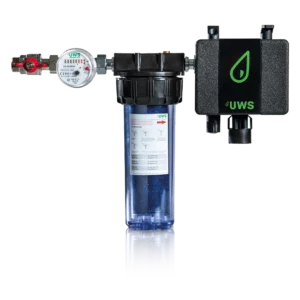
Mixed bed resin Vadion pH-Control from UWS

Mischbettharz Vadion pH Control

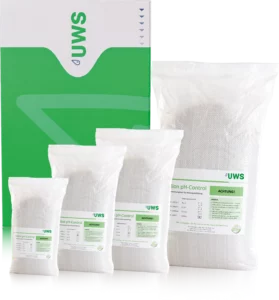
Our Vadion pH-Control is a mixed bed resin that not only desalinates the water to < 100 μS/cm (equivalent to 0-2 °fh) but also ensures that the pH value of the filling water is within the required range.
To the product

Salt content – the invisible long-term problem

Salts in water are often the main driver for:

  • increasing conductivity
  • electrochemical reactions
  • creeping damage

They enter the system through:

  • untreated fill water
  • Make-up
  • diffusion
  • maintenance work

Once in the system, salts can only be removed again by taking specific measures.

Why “good drinking water” is not automatically good heating water

Drinking water is subject to strict legal requirements—but with a completely different goal:
Protecting human health, not protecting materials in systems.

What is harmless to humans can be problematic for heating systems:

  • Minerals
  • Salts
  • Oxygen

Therefore, the following applies:
Drinking water quality ≠ system water quality

Understanding heating water means avoiding damage

If you know and correctly classify conductivity, hardness, pH value, etc., you can:

  • Treat water in a targeted manner
  • Identify risks at an early stage
  • Control make-up water
  • Avoid damage before it occurs

Heating water quality is not an abstract specialist topic – it is the base of professional plant engineering.

A holistic view instead of individual values

Like all concepts from UWS Technologie, we never consider water quality in isolation.
Only the interaction of all parameters determines whether water:

  • stable
  • is compatible with materials
  • safe in the long term

in the system.

A single good value is not enough – the overall water system is what matters.

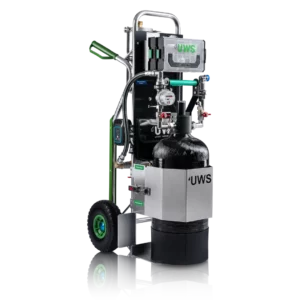
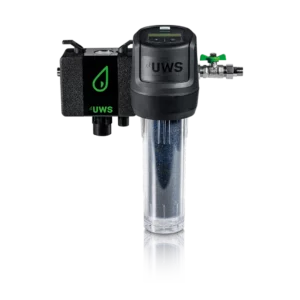
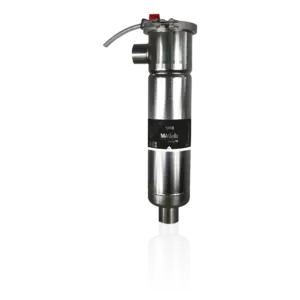
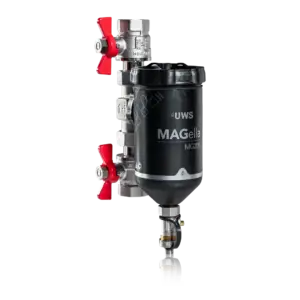
Heaty Ferriline

Heaty Ferriline No. 2

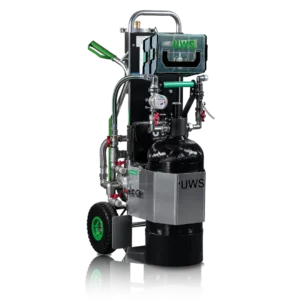
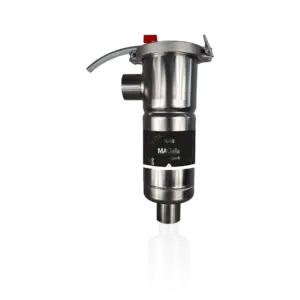
Complete unit for professional bypass treatment, sludge and magnetite filtration in the hot water area incl. MAGella twister
To the product

Conclusion: Water is a technical material

Water is not just water.
In heating and cooling systems, it is an active, chemically effective component of the system.

Those who understand its properties:

  • can plan more safely
  • works in compliance with guidelines
  • reduces liability risks
  • extends the service life of systems

Heating water quality begins with understanding—and ends with stability.