


pH Value Outside the Recommended Range: Why Incorrect Values Cause Long-Term Damage to Heating Systems
The pH value is one of the most frequently measured – and at the same time one of the most underestimated – parameters in heating water.
In many cases it is checked once, ticked off, and then no longer questioned.
The problem with this approach is simple:
A pH value outside the recommended range does not cause immediate problems – but it causes continuous long-term effects.
And that is exactly what makes it so dangerous for heating systems.
The pH Value: A Key Control Parameter in Heating Systems
The pH value describes whether water behaves acidic, neutral, or alkaline.
In technical systems, it has a significant influence on:
- corrosion behaviour
- material compatibility
- the stability of chemical processes within the heating circuit
Even small deviations can lead to significant long-term damage – particularly in modern systems with complex material combinations.
To prevent the pH value from becoming an unknown variable, reliable and reproducible measurements are essential.
Professional measuring devices such as the WaterBoy allow accurate on-site pH measurement and at the same time provide a reliable basis for documentation and evaluation.

Messkoffer WaterBoy
The UWS WaterBoy measuring case contains everything the HVAC specialist needs to measure data in accordance with the VDI 2035, ÖNORM H 5195-1 and SWKI BT 102-01 standards in two L-BOXXES.To the product
Why “Slightly Off” Is Not a Minor Issue
In practice, one often hears statements such as:
“The pH value is not perfect, but still acceptable.”
This mindset is problematic.
The pH value does not act at a single point in time – it acts continuously, 24 hours a day, over many years.
A permanently incorrect pH value can lead to:
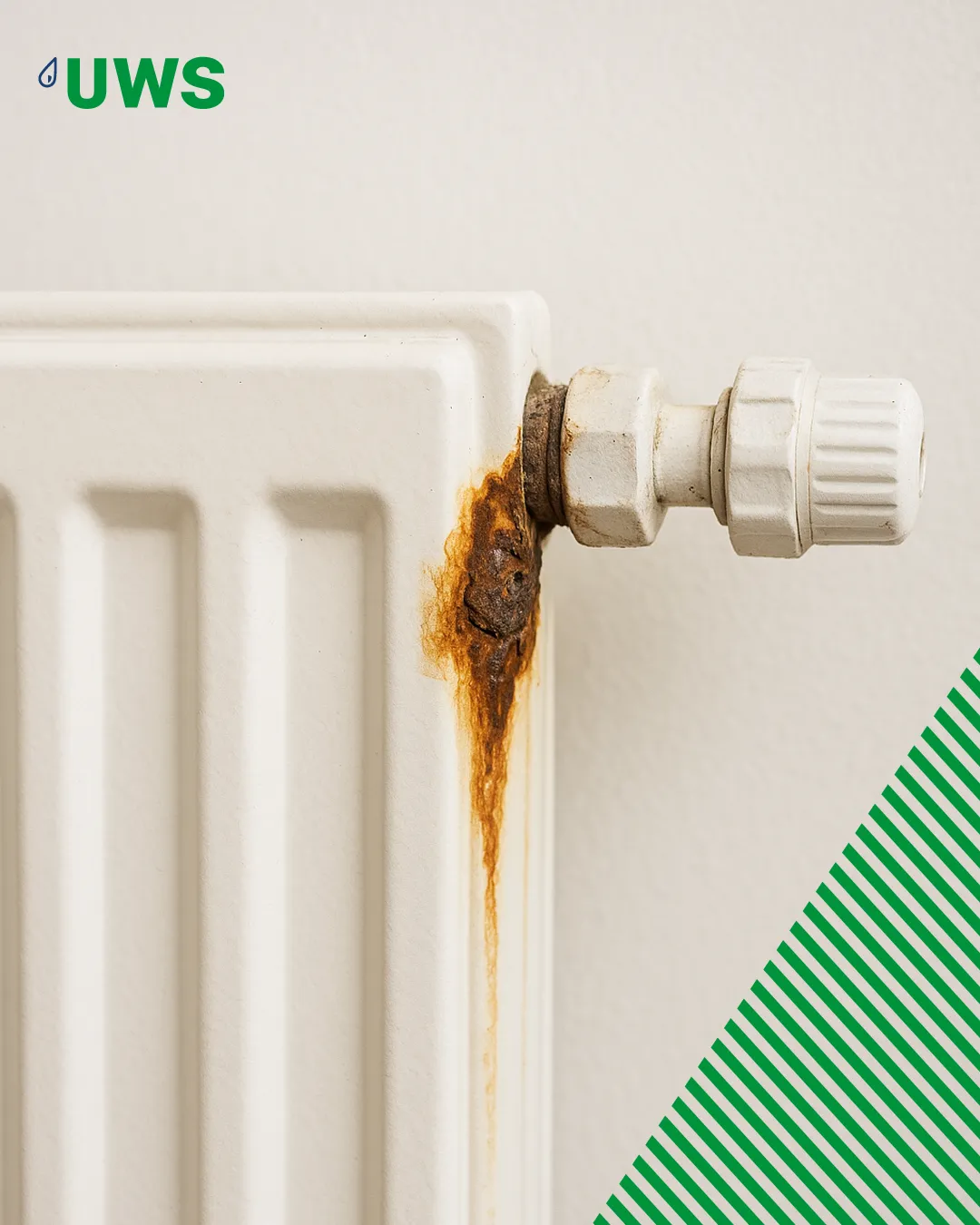
- accelerated corrosion
- dissolution of protective oxide layers
- increased release of metal ions
- increasing formation of magnetite
All of this develops gradually and often remains unnoticed unless the system is measured and documented regularly.
Low pH Value: Corrosion in Continuous Operation
If the pH value is too low, the heating water becomes acidic.
The consequences are particularly severe for metallic components.
Typical effects include:
- increased material dissolution
- pitting corrosion
- damage to steel and copper components
- increased iron release → magnetite formation
Especially in systems with steel pipes or cast iron components, a low pH value represents a significant risk factor.
Without regular monitoring, these processes often remain undetected until the first damage becomes visible.
High pH Value: Risk for Aluminium and Seals
An excessively high pH value can also be problematic – particularly in modern systems.
Aluminium reacts sensitively to strongly alkaline environments.
Possible consequences include:
- damage to aluminium heat exchangers
- destruction of passive protective layers
- Leaks
- premature component wear
A high pH value can appear deceptively harmless, as corrosion is not immediately visible but develops gradually over time.
Mixed Materials Make pH Control Especially Critical
Modern heating systems rarely consist of a single material.
Typical combinations include:
- steel
- copper
- aluminium
- stainless steel
- plastics
Each of these materials reacts differently to pH levels.
A value that is acceptable for one material may already be critical for another.
Therefore, the following applies:
The correct pH value is always material-dependent – never universal.
Guidelines Provide Orientation – But Do Not Replace Monitoring
The VDI 2035 guideline specifies recommended pH ranges for heating systems.
However, it is important to understand:
It is a technical guideline, not a mandatory standard – and it must be actively implemented in practice.
This means:
- measuring the pH value regularly
- taking deviations seriously
- not relying on a single measurement
A pH value that is initially adjusted correctly will not automatically remain stable – especially if make-up water is added regularly.
Make-Up Water Gradually Changes the pH Value
One of the most common reasons for pH shifts is make-up water addition.
Every litre of newly introduced water can:
- alter the pH value
- weaken buffering effects
- disturb existing chemical equilibria
This becomes particularly critical when:
- untreated water is added
- no follow-up measurement is carried out
- changes remain unnoticed
Professional make-up systems from the Heaty Complete series ensure that every make-up process is automatically treated and controlled.
This prevents uncontrolled pH drift and helps maintain stable water chemistry.
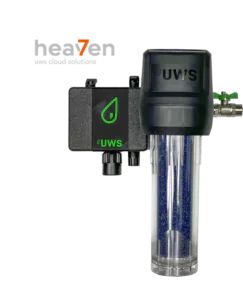
Heaty Complete Professional
Heaty Complete PROfessional is the world’s first smart IoT make-up system, including Cloud connection – fully automatic, leakage protection and digital water meter.To the product
Stabilizing the pH Value Instead of Only Measuring It
Measurement alone is not enough – stabilization is crucial.
This is where targeted water treatment media come into play.
The Vadion pH-Control mixed-bed resin is designed not only to demineralize heating water but also to stabilize the pH value within the recommended range.
This makes it possible to:
The Vadion pH-Control mixed-bed resin is designed not only to demineralize heating water but also to stabilize the pH value within the recommended range.
This makes it possible to:
- compensate for pH shifts
- establish material-compatible conditions
- effectively limit corrosion processes
Especially in sensitive systems, this is a key factor for long-term operational reliability.

Mischbettharz Vadion pH Control
Our Vadion pH-Control is a mixed-bed resin that not only demineralizes the water to < 100 μS/cm (corresponding to 0–3 °dH), but also ensures that the pH value of the fill water remains within the required range.To the product
The pH Value Is Not Just a Measurement – It Is an Early Warning Signal
Like all holistic concepts from UWS Technologie, practical experience shows:
The pH value is more than just a number in a measurement protocol.
It is an early indicator of:
- chemical instabilities
- developing corrosion processes
- unsuitable operating conditions
Ignoring it usually means reacting only when damage has already occurred.
Conclusion: An Incorrect pH Value Causes Silent but Lasting Damage
A pH value outside the recommended guideline ranges rarely causes immediate failures.
Instead, it damages systems slowly, continuously, and permanently.
Those who:
- monitor the pH value regularly using suitable measuring devices
- control and treat make-up water
- actively stabilize the water chemistry
protect:
- the system technology
- investments
- operational reliability
The correct pH value is not a minor detail –
it is a fundamental prerequisite for stable heating system operation.

 Contact us